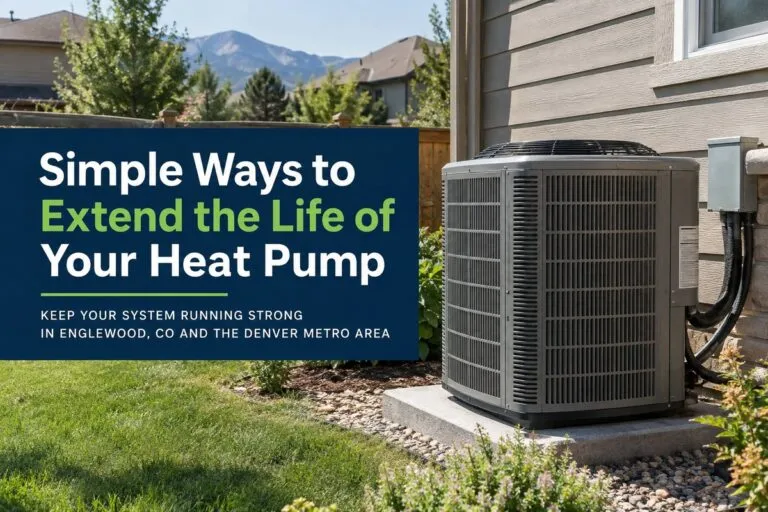
Simple ways to extend the life of your heat pump can help you get more years of dependable heating and cooling while reducing the risk of expensive repairs. For homeowners in Englewood, CO and throughout the Denver Metro area, regular heat pump maintenance is especially important because the system may work through cold winter temperatures, warm summer afternoons, and significant temperature swings throughout the year.
A heat pump is a major investment in your home’s comfort. While normal wear is unavoidable, good maintenance habits can reduce unnecessary strain on the system and help its major components operate more efficiently. The key is keeping airflow unrestricted, addressing small problems early, maintaining the outdoor unit, and scheduling professional service before minor issues develop into major failures.
Replace or Clean Your Air Filter Regularly
One of the easiest ways to extend the life of your heat pump is also one of the easiest maintenance tasks to overlook. A dirty HVAC filter restricts airflow through the system, which can make the heat pump work harder to maintain the temperature you have selected.
Restricted airflow can contribute to longer operating cycles, reduced comfort, higher energy consumption, and additional stress on important HVAC components.
How Often Should You Check the Filter?
There is no single replacement schedule that works for every Denver-area home. The type of filter, household size, pets, indoor air quality, construction activity, and how frequently the heat pump operates can all affect how quickly a filter becomes dirty.
A good habit is to inspect the filter approximately once a month and replace or clean it when necessary. Some filters may last several months, while others need attention more frequently.
Factors that may require more frequent filter changes include:
- Multiple pets in the home
- Heavy heat pump usage
- Recent remodeling or construction
- High levels of indoor dust
- A filter that is visibly dirty
- Reduced airflow from supply vents
Always use a filter that is appropriate for your particular HVAC system. A filter that is excessively restrictive can create airflow problems even when it is clean.
Keep the Outdoor Heat Pump Unit Clear
Your outdoor unit needs sufficient airflow to transfer heat effectively. Leaves, grass, weeds, dirt, and other debris can accumulate around the equipment and interfere with normal operation.
Periodically inspect the area surrounding your outdoor heat pump. Remove loose leaves, weeds, and other debris and avoid placing objects directly next to the unit.
Give the Unit Room to Breathe
Landscaping can make an outdoor HVAC unit less noticeable, but shrubs and plants should not crowd the equipment. Vegetation that grows too close can restrict airflow and make it more difficult for an HVAC technician to access the system for heat pump maintenance or repairs.
Homeowners should also watch for:
- Grass clippings accumulating around the unit
- Leaves collecting against the coil
- Overgrown shrubs or weeds
- Items being stored beside the equipment
- Snow accumulation that blocks airflow
- Debris deposited after strong winds or storms
Denver Metro weather can change quickly, so checking the outdoor unit after heavy snow, strong winds, or yard work is a simple preventive measure.
Schedule Professional Heat Pump Maintenance
Routine professional maintenance is one of the most important steps you can take to extend heat pump life. Unlike a furnace or traditional air conditioner that primarily works during one season, a heat pump can provide both heating and cooling.
That means many heat pumps operate during a significant portion of the year.
What Professional Maintenance Can Address
During heat pump service, an HVAC technician can inspect system components and identify conditions that may be affecting performance. The exact maintenance procedure depends on the equipment, but service may include checking electrical components, airflow, controls, coils, refrigerant-related performance, and other critical parts of the system.
Professional heat pump maintenance can help identify problems such as:
- Loose or deteriorating electrical connections
- Dirty components
- Drainage problems
- Abnormal system operation
- Airflow issues
- Unusual wear
- Refrigerant-related performance concerns
- Components that are beginning to fail
Finding these problems early can make a significant difference. A relatively small issue may place additional strain on other parts of the system if it is allowed to continue.
Do Not Ignore Changes in Heat Pump Performance
Heat pumps often provide warning signs before a serious problem develops. Paying attention to changes in the way your HVAC system sounds, feels, and operates can help you arrange heat pump repair before additional damage occurs.
If your system suddenly behaves differently, there is usually a reason.
Warning Signs Worth Investigating
Contact an HVAC professional if you notice problems such as:
- Unusual grinding, rattling, buzzing, or squealing noises
- Weak airflow from the vents
- Heating or cooling that feels less effective than usual
- Frequent starting and stopping
- Unexpected increases in energy usage
- Unusual odors
- Ice buildup that appears excessive or persistent
- Rooms becoming increasingly difficult to keep comfortable
- A heat pump that seems to run constantly
Not every unusual symptom means the heat pump needs a major repair. However, continuing to operate equipment with an unresolved mechanical or electrical problem can sometimes turn a smaller repair into a more expensive one.
Avoid Constant Thermostat Adjustments
Frequently making large thermostat changes does not necessarily make your home reach the desired temperature faster. It can instead contribute to unnecessary system operation, depending on your heat pump, thermostat, and auxiliary heating configuration.
Choose comfortable temperature settings and allow the system to operate normally.
Use Your Thermostat Properly
A compatible programmable or smart thermostat can help maintain consistent temperatures based on your household’s schedule. However, heat pumps can behave differently from conventional furnaces, especially when recovering from large temperature setbacks.
For that reason, extremely aggressive thermostat setbacks may not always produce the expected savings.
If your thermostat controls both a heat pump and auxiliary or backup heat, make sure it is configured correctly for the equipment. Improper thermostat setup can affect comfort, energy use, and system operation.
Keep Supply and Return Vents Unobstructed
Your heat pump depends on air moving throughout the home. Furniture, rugs, boxes, curtains, and other household items can unintentionally block supply registers or return-air grilles.
Check your vents periodically, especially after rearranging furniture.
Proper airflow helps the HVAC system distribute conditioned air effectively and may reduce unnecessary strain. If several rooms have weak airflow even though the vents are open and unobstructed, have an HVAC technician investigate the underlying cause.
Keep Indoor HVAC Components Clean
Dust does not only collect on the filter. Over time, contaminants can accumulate on other parts of an HVAC system and interfere with performance.
Basic housekeeping around accessible HVAC equipment can help. Keep the area surrounding the indoor unit clean and avoid storing objects directly against the equipment.
However, homeowners should avoid opening electrical compartments or attempting to clean internal components that require HVAC training. Professional heat pump maintenance is a safer choice when cleaning involves electrical parts, coils, motors, refrigerant components, or other internal equipment.
Pay Attention to Ice and Snow During Colorado Winters
Winter weather deserves special attention for heat pumps in Englewood and the Denver Metro area. Some frost on an outdoor heat pump can be normal during cold-weather operation, and heat pumps use a defrost cycle to manage it.
Heavy or persistent ice buildup is different.
Know When Ice May Indicate a Problem
If the outdoor unit becomes heavily encased in ice or repeatedly develops excessive ice that does not clear, the system may need professional attention.
Do not chip ice from the heat pump with a sharp object. Doing so can damage coils, refrigerant tubing, or other components.
After significant snowfall, visually check that the outdoor unit has adequate airflow and that snow has not created a major obstruction around it. Be careful when clearing snow so the equipment itself is not damaged.
Address Drainage Problems Promptly
Depending on the heat pump system and operating conditions, moisture needs to drain properly from the HVAC equipment. Clogged or poorly functioning drainage can contribute to water leaks and other problems around the indoor unit.
Signs of a potential drainage issue can include visible water where it normally should not be, unusual moisture around the equipment, or recurring drain-related shutdowns.
If you notice water around your HVAC equipment and cannot identify a simple, safe explanation, schedule professional service. Water and electrical HVAC components are not a combination to ignore.
Have Airflow Problems Professionally Diagnosed
Changing the filter and opening blocked vents can solve basic airflow problems, but persistent airflow issues require further investigation.
Problems elsewhere in the HVAC system or ductwork may prevent the heat pump from operating as efficiently as it should.
Signs of an Airflow Problem
You may have an airflow issue if:
- Some rooms receive significantly less air than others
- Airflow from multiple vents has noticeably decreased
- The system runs for unusually long periods
- The home has become difficult to heat or cool evenly
- Replacing a dirty filter does not improve airflow
Instead of compensating by repeatedly adjusting the thermostat, have the system inspected. Correcting the underlying issue can improve comfort while reducing unnecessary heat pump workload.
Do Not Put Off Minor Heat Pump Repairs
Delaying HVAC repairs is one of the easiest ways to increase wear on a heat pump.
For example, a component that is no longer operating correctly may cause other parts of the system to work harder. What begins as a relatively manageable heat pump repair can become a larger problem if the system continues operating under abnormal conditions.
Schedule service when you notice persistent performance changes rather than waiting for the heat pump to stop working completely.
Protect the Outdoor Unit Without Restricting It
The outdoor heat pump is designed to operate outside, so it generally does not need to be wrapped or tightly covered during winter. In fact, obstructing airflow can interfere with operation.
The better approach is to keep the area surrounding the equipment clean and clear while protecting it from avoidable physical damage.
Avoid:
- Leaning tools against the unit
- Storing outdoor furniture directly beside it
- Allowing shrubs to grow into the equipment
- Directing roof or gutter runoff onto the unit
- Covering an operating heat pump with an airtight cover
- Allowing heavy debris to accumulate on or around it
If falling ice, drainage, landscaping, or another property condition repeatedly affects the heat pump, an HVAC professional can recommend an appropriate solution that does not interfere with airflow or service access.
Monitor Energy Usage and Comfort
You do not need specialized HVAC equipment to notice when something changes. Your utility bills and indoor comfort can provide useful clues about heat pump performance.
Compare energy consumption with similar periods when possible. A single high bill can result from unusually hot or cold weather, but a continuing unexplained increase may deserve attention.
A heat pump that requires increasingly long operating cycles to provide the same level of comfort may have a maintenance or repair issue.
Make Preventive Heat Pump Maintenance a Habit
Extending heat pump life usually comes down to consistency rather than one major maintenance task. Keeping filters clean, maintaining airflow, watching the outdoor unit, responding to unusual symptoms, and scheduling professional HVAC maintenance can all help reduce avoidable wear.
A simple homeowner heat pump maintenance routine should include:
- Inspecting the HVAC filter regularly
- Keeping supply and return vents clear
- Checking the outdoor unit for debris
- Watching for excessive ice or snow obstruction
- Paying attention to unusual noises and odors
- Monitoring changes in heating and cooling performance
- Addressing water or drainage problems
- Scheduling professional heat pump maintenance
- Arranging repairs promptly when something is wrong
For homeowners in Englewood, CO and throughout the Denver Metro area, taking care of a heat pump throughout the year can help protect comfort and get more value from the equipment. If your heat pump is making unusual noises, struggling to maintain temperature, running excessively, or simply needs routine maintenance, David’s HVAC can inspect the system and help address problems before they lead to unnecessary wear or a more expensive breakdown.
Content reviewed and published according to the David's HVAC Editorial Team.