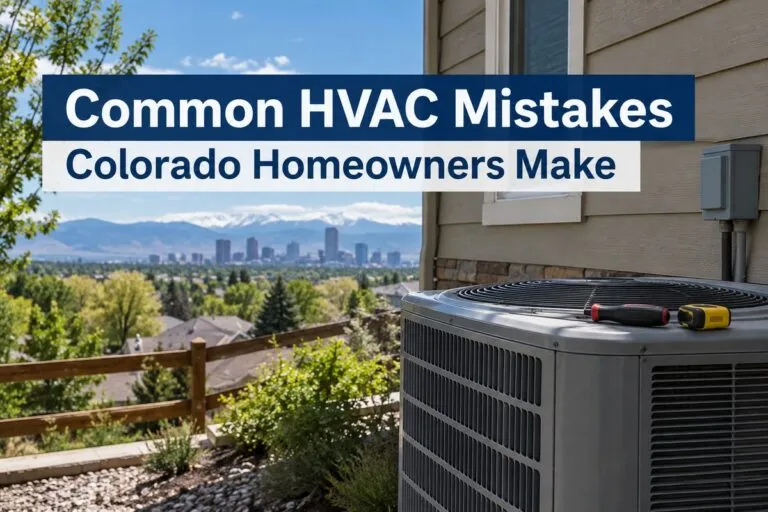
Common HVAC mistakes Colorado homeowners make can lead to higher energy bills, uneven temperatures, poor indoor air quality, unexpected breakdowns, and a shorter lifespan for heating and cooling equipment. In Englewood, Denver, and throughout the Denver Metro area, HVAC systems have to handle cold winter nights, warm summer afternoons, dry air, and major temperature swings.
Some HVAC problems are unavoidable, but many expensive repairs begin with simple maintenance mistakes or operating habits. Knowing what to avoid can help Colorado homeowners keep their furnaces and air conditioners running efficiently while reducing unnecessary wear.
1. Forgetting to Change the HVAC Air Filter
One of the most common HVAC mistakes is leaving the same air filter in place for too long. Your filter collects dust, pet hair, pollen, and other airborne particles before they can circulate through the HVAC system.
As the filter becomes clogged, airflow decreases. The furnace or air conditioner may have to operate longer to reach the temperature set on the thermostat.
A dirty HVAC filter can contribute to:
- Reduced airflow from supply vents
- Higher heating and cooling costs
- Longer HVAC system run times
- Excess dust around the home
- Increased strain on HVAC components
- Reduced heating and cooling performance
- Frozen air conditioner evaporator coils in some situations
How Often Should Colorado Homeowners Change an HVAC Filter?
There is no single replacement schedule that works for every home. Filter thickness, HVAC usage, pets, household size, construction dust, and indoor air quality concerns can all affect how quickly a filter becomes dirty.
Checking the filter about once a month is a practical habit. Some filters may require frequent replacement, while thicker high-capacity filters can often remain in service longer.
Homeowners should also avoid assuming that a higher-rated filter is automatically better. A filter that is too restrictive for the HVAC system can interfere with proper airflow. If you are unsure which filter is appropriate, an HVAC technician can recommend an option compatible with your equipment.
2. Skipping Regular HVAC Maintenance
Waiting until the furnace or air conditioner stops working before calling an HVAC company can turn smaller issues into expensive repairs.
Preventive HVAC maintenance gives a technician an opportunity to inspect system operation, airflow, electrical components, safety controls, and other important parts before peak heating or cooling season.
Problems That HVAC Maintenance Can Catch Early
Depending on the equipment, professional maintenance may uncover issues such as:
- Dirty burners or flame sensors
- Worn electrical components
- Loose electrical connections
- Drainage problems
- Dirty indoor or outdoor coils
- Blower motor problems
- Unusual system cycling
- Airflow restrictions
- Thermostat issues
- Signs of abnormal equipment wear
Colorado HVAC systems can experience significant seasonal demands. Having heating equipment inspected before winter and cooling equipment checked before summer can reduce the chances of discovering a problem during extreme temperatures.
3. Constantly Making Large Thermostat Adjustments
Turning the thermostat dramatically higher does not make a furnace heat the house faster. Likewise, setting the thermostat extremely low will not necessarily make an air conditioner cool the home more quickly.
Large thermostat adjustments can instead result in unnecessarily long run times and uncomfortable indoor temperatures.
Use Temperature Setbacks Strategically
A programmable or smart thermostat can help homeowners automatically adjust temperatures based on their schedules. The key is using reasonable settings rather than constantly changing the temperature.
If your HVAC system struggles to maintain a normal thermostat setting, the solution is not always to adjust the thermostat further. Poor airflow, duct leakage, equipment problems, insulation deficiencies, or an incorrectly sized HVAC system may be contributing to the issue.
4. Closing Too Many HVAC Vents
Closing vents in unused rooms might seem like an easy way to save energy. However, a central HVAC system is designed to move a certain amount of air through its ductwork.
Closing multiple supply registers can increase pressure within the duct system and potentially create airflow problems.
Instead of shutting vents throughout the house, homeowners experiencing major temperature differences between rooms should have the underlying problem investigated.
Possible causes include ductwork issues, poor insulation, air leakage, inadequate return airflow, balancing problems, or HVAC equipment that is not properly matched to the home.
5. Ignoring Unusual Furnace and Air Conditioner Noises
HVAC systems naturally make some noise while operating, but a new or noticeably louder sound deserves attention.
Rattling, grinding, squealing, buzzing, banging, or repeated clicking can indicate anything from a loose component to an electrical or mechanical problem.
Pay Attention to Changes in System Operation
Contact an HVAC professional when you notice changes such as:
- New or unusually loud noises
- Burning or electrical odors
- Weak airflow
- Frequent starting and stopping
- HVAC equipment running much longer than normal
- Some rooms suddenly becoming hotter or colder
- Furnace ignition problems
- Air conditioner blowing warm air
- Unexplained increases in utility costs
Addressing a developing HVAC problem early may prevent additional components from being damaged.
6. Blocking Return Air Vents
Return vents are an important part of your home’s HVAC airflow. They pull indoor air back toward the heating and cooling equipment so it can be conditioned and redistributed.
Furniture, boxes, rugs, curtains, and other household items can accidentally block return grilles. When return airflow is restricted, HVAC performance can suffer.
Keep both supply and return vents unobstructed whenever possible. If airflow remains weak even when vents are open and clear, an HVAC technician can check for duct restrictions, blower problems, filter issues, or other causes.
7. Neglecting the Outdoor Air Conditioning Unit
The outdoor AC unit needs adequate airflow to release heat. Grass clippings, leaves, weeds, dirt, and other debris can accumulate around the equipment.
Homeowners can help by keeping the surrounding area clear and occasionally checking for obvious debris.
Avoid DIY Coil Cleaning That Could Cause Damage
The fins and coils of an outdoor air conditioner can be damaged if they are cleaned improperly. Aggressive pressure washing, harsh chemicals, or bending delicate fins can create additional problems.
Basic debris removal around the unit is reasonable homeowner maintenance. More extensive AC cleaning and servicing is better handled as part of professional air conditioning maintenance.
8. Ignoring Small HVAC Problems Until the System Stops Working
A furnace or air conditioner does not always fail without warning. Performance often changes before a complete breakdown occurs.
Perhaps the furnace starts cycling more frequently. Maybe the AC runs for hours but the house remains warmer than the thermostat setting. You might notice one room that suddenly receives very little airflow.
These symptoms are worth investigating.
Small HVAC problems can sometimes put additional stress on other components. Scheduling HVAC repair when you first notice a change can also make it easier to diagnose the original cause.
9. Trying to Handle Complex HVAC Repairs Yourself
Colorado homeowners can perform basic tasks such as changing filters, keeping vents unobstructed, and clearing debris from around outdoor equipment. Many HVAC repairs, however, require specialized training and diagnostic equipment.
Electrical components, gas furnaces, refrigerant systems, combustion equipment, and internal HVAC controls should be handled carefully.
Attempting complicated DIY HVAC repairs can damage equipment, create safety concerns, and make the original problem harder to diagnose.
Know When to Call an HVAC Technician
Professional HVAC service is appropriate when a system has electrical problems, refrigerant concerns, ignition failures, repeated shutdowns, unusual odors, significant airflow problems, or recurring error codes.
If a gas furnace appears to have a combustion or gas-related problem, stop using the equipment and have the situation evaluated promptly.
10. Overlooking Carbon Monoxide Safety
Homes with fuel-burning furnaces and other combustion appliances need working carbon monoxide detectors.
Carbon monoxide is particularly dangerous because people cannot see or smell it. Homeowners should follow manufacturer instructions for detector placement, testing, battery replacement, and detector replacement.
A furnace should also receive appropriate professional inspection and maintenance. A technician can examine combustion-related components and identify visible signs of deterioration or operating problems.
If a carbon monoxide alarm sounds, follow the alarm manufacturer’s emergency instructions and local emergency guidance rather than trying to troubleshoot the furnace yourself.
11. Assuming a Bigger HVAC System Is Better
Another common HVAC mistake Colorado homeowners make is assuming that the largest furnace or air conditioner will provide the best comfort.
HVAC equipment should be properly sized for the home. Bigger is not automatically better.
An oversized air conditioner may cool a home quickly but cycle on and off frequently. An incorrectly sized furnace can also experience short operating cycles and inconsistent comfort.
HVAC Sizing Should Consider the Actual Home
Proper equipment selection can involve factors such as:
- Home size and layout
- Insulation levels
- Window type and orientation
- Air leakage
- Ductwork
- Local climate conditions
- Heat gain and heat loss
- Existing HVAC configuration
When replacing a furnace or air conditioner, homeowners should ask how the contractor determined the appropriate equipment capacity rather than selecting a unit based only on the size of the old system.
12. Ignoring Ductwork Problems
Your furnace and air conditioner can operate correctly while damaged or poorly designed ductwork prevents conditioned air from reaching rooms effectively.
Duct leakage can waste heated or cooled air before it reaches the living space. Restricted or poorly balanced ductwork can also contribute to weak airflow and uncomfortable rooms.
Common signs of potential ductwork problems include noticeable temperature differences between rooms, weak airflow at certain registers, excessive dust, noisy ducts, or unusually long HVAC run times.
A professional HVAC inspection can help determine whether the problem is coming from the equipment, ductwork, or another part of the home.
13. Running the Air Conditioner With a Severely Clogged Filter
A dirty filter is particularly troublesome during periods of heavy AC use. Reduced airflow across the indoor evaporator coil can contribute to the coil becoming too cold and freezing.
A frozen AC system may stop cooling effectively even though the equipment continues to operate.
If you notice ice on refrigerant lines or HVAC components, turning the thermostat lower is not the solution. The system should be evaluated to determine whether the cause involves airflow, the filter, refrigerant conditions, the blower, or another component.
14. Waiting Until the First Cold Day to Test the Furnace
Colorado weather can change quickly, and waiting for freezing temperatures before discovering that the furnace has a problem can leave homeowners scrambling for emergency HVAC repair.
Test your heating system before you depend on it every day.
Listen for unusual noises, make sure warm air reaches the rooms, and pay attention to odors or abnormal cycling. If the furnace does not operate normally, scheduling service before colder weather arrives can be much more convenient.
The same principle applies to air conditioning. Testing the AC before the hottest part of summer gives you time to address cooling problems before the system faces sustained demand.
15. Choosing HVAC Service Based Only on the Lowest Price
Price is understandably important when comparing HVAC repair or replacement options, but the lowest initial quote does not necessarily represent the lowest long-term cost.
Quality HVAC work depends on proper diagnosis, correct installation, appropriate equipment sizing, airflow considerations, and attention to the entire heating and cooling system.
When comparing HVAC companies in Englewood or the Denver Metro area, ask what is included in the estimate and whether the proposed work addresses the underlying cause of the problem.
For HVAC replacement, homeowners should also understand the equipment being proposed, warranty coverage, installation scope, thermostat compatibility, and whether existing ductwork or airflow issues need attention.
16. Replacing HVAC Equipment Without Addressing Existing Comfort Problems
A new furnace or air conditioner can improve reliability and efficiency, but new equipment will not automatically correct every problem in the home.
If certain bedrooms were uncomfortable with the previous HVAC system, tell the contractor before installing replacement equipment. The problem could involve ducts, returns, insulation, air leakage, equipment sizing, or airflow balancing.
This is an important opportunity to look at the HVAC system as a whole rather than simply replacing one piece of equipment.
17. Ignoring Colorado’s Dry Indoor Air
Colorado’s dry climate can make indoor comfort more complicated, particularly during heating season. Homeowners sometimes respond by continually increasing the thermostat because the house still feels uncomfortable.
Temperature may not be the only factor affecting comfort.
A whole-home humidifier may be appropriate for some properties, but humidity should be managed carefully. Excess indoor humidity can create condensation and moisture problems, especially around cold surfaces.
An HVAC professional can help determine whether humidity control makes sense for your home and existing heating system.
18. Assuming Higher Energy Bills Are Always Caused by Utility Rates
Utility rates certainly affect monthly expenses, but a noticeable increase in energy consumption can also be a sign that your HVAC system is operating differently.
If your heating or cooling usage increases without an obvious explanation, consider whether the furnace or AC is running longer than it used to.
Possible HVAC-related causes can include dirty filters, airflow restrictions, aging components, thermostat problems, duct leakage, neglected maintenance, or equipment that is beginning to lose performance.
Comparing energy use from similar periods can provide a more useful picture than comparing the dollar amount of two bills alone.
19. Not Planning Ahead for HVAC Replacement
Waiting until a furnace or air conditioner fails completely can limit your options. During extreme weather, restoring heating or cooling understandably becomes the immediate priority.
If your HVAC equipment is aging and requiring increasingly frequent repairs, it can be useful to discuss replacement options before an emergency occurs.
Planning ahead gives homeowners more time to compare furnace and air conditioner options, understand installation requirements, evaluate efficiency levels, and budget for the project.
Avoid Costly HVAC Mistakes With Professional Service in Englewood, CO
Avoiding common HVAC mistakes can help Colorado homeowners get more consistent comfort, reduce unnecessary strain on their equipment, and identify heating and cooling problems before they become larger repairs.
For homeowners in Englewood, CO and the Denver Metro area, regular HVAC maintenance is especially valuable because heating and cooling systems must perform through significant seasonal temperature changes.
David’s HVAC provides HVAC services for homeowners in Englewood and throughout the Denver Metro area. Whether you need furnace repair, AC repair, HVAC maintenance, troubleshooting, or help determining whether your heating and cooling system needs replacement, having the system professionally evaluated can help you make an informed decision based on the condition of your equipment.
If your furnace, air conditioner, thermostat, airflow, or overall home comfort has changed, addressing the problem early is often better than waiting for a complete HVAC breakdown.
Content reviewed and published according to the David's HVAC Editorial Team.