
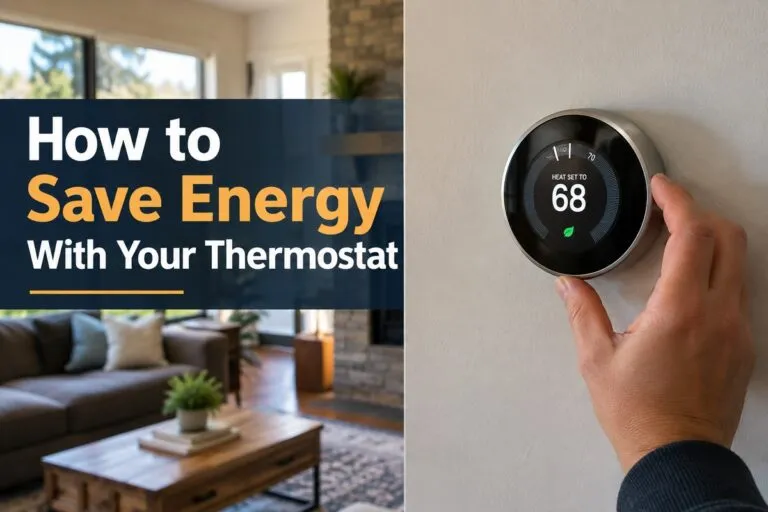
How to save energy with your thermostat starts with using the right temperature settings, scheduling adjustments around your routine, and avoiding habits that make your HVAC system work harder than necessary. For homeowners in Englewood, CO and throughout the Denver Metro area, smart thermostat use can help reduce heating and cooling costs while keeping your home comfortable through Colorado’s changing seasons.
Your thermostat has a major influence on how often your furnace and air conditioner run. Small adjustments to thermostat settings and schedules can add up over time, especially during cold winter nights and hot summer afternoons.
Use Energy-Efficient Thermostat Settings
One of the simplest ways to save energy is to avoid maintaining the exact same indoor temperature around the clock. Your home usually does not need maximum heating or cooling while everyone is asleep or away.
The U.S. Department of Energy recommends adjusting your thermostat from your normal setting for portions of the day when practical. The larger the temperature difference between the inside and outside of your home, the more your HVAC system generally has to work to maintain the indoor temperature.
During the heating season, consider lowering the thermostat when you are sleeping or away from home. During cooling season, setting the temperature higher during those periods can reduce unnecessary air conditioner operation.
Comfort varies from household to household, so there is no single thermostat setting that works for everyone. The goal is to find the widest energy-saving adjustment your household can comfortably maintain.
Create a Thermostat Schedule Around Your Routine
A consistent thermostat schedule helps your HVAC system avoid heating or cooling an empty house unnecessarily.
A programmable thermostat or smart thermostat makes these adjustments automatically. Instead of remembering to change the temperature every time you leave, you can create schedules based on your normal routine.
A practical weekday schedule may include:
- Morning: Adjust the temperature shortly before your household wakes up.
- Work and school hours: Use a more energy-efficient setting while the home is empty.
- Evening: Return the home to your preferred comfort temperature before everyone arrives.
- Overnight: Adjust the temperature while your household sleeps.
Avoid creating an overly complicated schedule. A simple schedule that accurately reflects when your home is occupied is usually easier to maintain.
Adjust Your Schedule for Weekends
Your weekend routine may be completely different from your weekday schedule. If people are home most of Saturday and Sunday, using the same weekday setback could leave your house uncomfortable.
Most programmable and smart thermostats allow separate weekday and weekend schedules. Some models provide individual schedules for every day of the week.
Review these settings whenever your routine changes. A thermostat schedule created months ago may waste energy if work hours, school schedules, or occupancy patterns have changed.
Avoid Extreme Thermostat Adjustments
Setting your thermostat significantly higher in winter does not necessarily make your home heat faster. Similarly, turning the thermostat far below your desired temperature during summer does not necessarily cool the house faster.
In many conventional HVAC systems, the thermostat determines how long the heating or cooling equipment operates rather than making it produce dramatically hotter or colder air.
For example, if your home feels warm during summer, setting the thermostat to an unusually low temperature can cause the air conditioner to run longer than necessary. Once you are comfortable, you may have cooled the home beyond the temperature you actually wanted.
Set the thermostat to the temperature you want and allow your HVAC system time to reach it.
Make Small Temperature Changes
Large, frequent thermostat changes can make maintaining consistent comfort more difficult.
Instead, experiment with small adjustments. Changing your thermostat by a degree or two may reduce HVAC runtime without creating a noticeable difference in comfort.
This approach can be especially useful during Denver-area temperature swings, when outdoor conditions can change substantially over a short period.
Take Advantage of a Smart Thermostat
A smart thermostat can make energy-saving HVAC operation easier by automating temperature adjustments.
Depending on the model and HVAC system, smart thermostats may provide scheduling, remote control, occupancy detection, energy reports, and learning features. These tools can help identify periods when your heating or cooling system is operating unnecessarily.
Useful smart thermostat features can include:
- Automatic temperature schedules
- Remote temperature adjustments through a smartphone
- Home and away settings
- Energy-use reports
- Vacation modes
- Temperature and humidity monitoring
- Maintenance reminders
- Geofencing on compatible models
Remote access is particularly helpful when your plans change. If you leave Englewood for the day and forget to adjust the thermostat, a compatible smart thermostat can allow you to change the setting without returning home.
Use Smart Features Instead of Overriding Them
Installing a smart thermostat does not automatically reduce energy consumption. Its energy-saving value depends heavily on how it is configured and used.
Frequently overriding an efficient schedule can reduce potential savings. After installing a thermostat, spend some time setting up schedules, preferred temperatures, home and away modes, and other available efficiency features.
If your smart thermostat provides energy reports, review them periodically. Longer HVAC runtimes may correspond with extreme outdoor temperatures, schedule changes, maintenance issues, or inefficient thermostat settings.
Use Vacation and Away Settings
Heating or cooling an empty home to your normal occupied temperature can waste energy.
Before leaving for a vacation or extended trip, adjust your thermostat to an energy-saving temperature while still considering your home, pets, plants, plumbing, and other temperature-sensitive needs.
Many smart thermostats include vacation or away modes that make this easy. You may be able to choose your departure and return times so the HVAC system automatically resumes your preferred setting before you arrive home.
During Colorado winters, do not simply turn the heat off when leaving for an extended period. Maintaining adequate indoor temperatures is important for protecting plumbing and other parts of your home during freezing weather.
Put Your Thermostat in the Right Location
Thermostat location can affect how accurately it measures your home’s temperature.
If a thermostat receives direct sunlight, for example, it may sense a temperature that does not accurately represent the rest of the house. Similar problems can occur when thermostats are positioned near exterior doors, windows, kitchens, supply vents, or other sources of unusual temperature changes.
For more accurate temperature control, a thermostat generally should be located in a representative area of the home where normal household air circulates.
Potential thermostat location problems include:
- Direct sunlight
- Drafty doors or windows
- Nearby supply registers
- Heat-producing appliances
- Fireplaces
- Exterior walls with significant temperature variation
- Areas that are considerably warmer or colder than the rest of the home
If certain rooms remain uncomfortable even when the thermostat displays the desired temperature, thermostat placement may be one factor worth investigating.
Change Thermostat Settings With the Seasons
Energy-efficient thermostat settings should change along with Colorado’s seasons.
During winter, the goal is to maintain comfortable temperatures when the house is occupied while reducing unnecessary heating when possible. During summer, you can use the opposite approach by allowing the indoor temperature to rise when the house is empty.
Spring and fall provide additional opportunities to reduce HVAC use. Englewood and the Denver Metro area can experience comfortable daytime temperatures during these shoulder seasons, although temperature swings can also be significant.
Pay attention to outdoor conditions instead of assuming your heating or cooling system needs to operate exactly as it did the previous week.
Check Your Schedule After Daylight Saving Time and Seasonal Changes
Seasonal transitions are a useful reminder to inspect thermostat programming.
Confirm that the thermostat’s time and schedule are correct and that programmed temperatures still fit your routine. Smart thermostats connected to the internet may update their clocks automatically, while some programmable thermostats require manual adjustments.
This is also a good opportunity to replace thermostat batteries when applicable and check for maintenance alerts.
Use Ceiling Fans With Your Thermostat
Ceiling fans can complement thermostat settings during warmer months.
Fans do not actually lower the temperature of a room. Instead, moving air can help people feel cooler. That may allow you to use a slightly higher air conditioning thermostat setting while remaining comfortable.
Remember to turn ceiling fans off when rooms are unoccupied. Since the cooling effect is primarily beneficial to people in the room, running an empty-room fan generally provides little comfort benefit.
During colder months, some ceiling fans can be operated at a low speed in the manufacturer-recommended winter direction to help redistribute warm air that collects near the ceiling.
Don’t Ignore HVAC Maintenance
Thermostat adjustments are most effective when the HVAC equipment itself is operating properly.
A thermostat can call for heating or cooling efficiently, but it cannot compensate for every problem caused by restricted airflow, dirty components, failing equipment, or overdue maintenance.
Homeowners should pay attention to issues such as:
- HVAC equipment running much longer than usual
- Frequent cycling on and off
- Uneven temperatures throughout the house
- Rooms that never reach the thermostat setting
- Unexpected increases in heating or cooling costs
- Weak airflow from supply vents
- A thermostat temperature that seems inaccurate
Check your HVAC filter regularly and replace it according to the filter manufacturer’s recommendations and your home’s conditions. A heavily restricted filter can reduce airflow and affect HVAC performance.
Professional HVAC maintenance can also help identify problems that may be increasing heating or cooling energy use.
Avoid Constantly Changing the Thermostat
Repeatedly adjusting the thermostat throughout the day can work against a well-planned energy-saving schedule.
If you regularly feel too warm or too cold, look for the underlying reason before continuing to change the temperature. The issue may involve thermostat programming, airflow, insulation, equipment performance, or temperature differences between different parts of the house.
A consistent schedule gives you a better baseline for determining whether your thermostat settings are actually working.
If several family members regularly adjust the thermostat, consider agreeing on a comfortable temperature range. Some smart thermostats also offer controls that can help prevent accidental or excessive changes.
Pay Attention to Humidity and Comfort
Temperature is only one part of indoor comfort.
Colorado’s dry climate can influence how indoor temperatures feel, particularly during the heating season. Humidity levels, airflow, direct sunlight, and drafts can all affect comfort even when the thermostat shows the same temperature.
If you continually adjust the thermostat but still feel uncomfortable, the temperature setting may not be the only issue.
An HVAC professional can evaluate the system when persistent comfort problems occur, especially if certain areas of the home are consistently much warmer or colder than others.
Check Whether Your Thermostat Matches Your HVAC System
Not every thermostat is compatible with every heating and cooling system.
Heat pumps, multi-stage furnaces, variable-capacity equipment, dual-fuel systems, and other HVAC configurations may require specific thermostat capabilities. Using an incompatible thermostat or incorrect configuration can prevent equipment from operating as intended.
This is particularly important when replacing an older thermostat with a smart thermostat.
Before purchasing or installing a new thermostat, confirm compatibility with your HVAC equipment. Proper installation and configuration help ensure that heating stages, cooling stages, fans, heat pumps, and auxiliary heat operate correctly when applicable.
Watch for Signs Your Thermostat May Have a Problem
Sometimes higher energy use is not caused by your temperature preferences. The thermostat itself may not be operating correctly.
Possible warning signs include inaccurate temperature readings, a blank or unresponsive display, frequent HVAC cycling, failure to start heating or cooling, or significant differences between the thermostat setting and actual indoor conditions.
Before assuming the furnace or air conditioner has failed, check the thermostat settings, operating mode, schedule, and batteries if your model uses them.
If the problem continues, professional HVAC troubleshooting can determine whether the thermostat, wiring, controls, or heating and cooling equipment requires attention.
Get More From Your Thermostat and HVAC System
Learning how to save energy with your thermostat comes down to consistent, practical adjustments. Use energy-efficient settings when your home is empty, create schedules around your routine, avoid extreme temperature changes, and take advantage of smart thermostat features when available.
Your thermostat also works as part of a larger heating and cooling system. If your HVAC system runs constantly, struggles to maintain the set temperature, or produces unusually high energy bills despite sensible thermostat settings, it may be time to have the equipment inspected.
David’s HVAC provides HVAC services in Englewood, CO and throughout the Denver Metro area. Whether you need thermostat help, HVAC maintenance, heating service, air conditioning service, or assistance improving your home’s comfort and efficiency, professional service can help ensure your thermostat and HVAC equipment are working together properly.
Content reviewed and published according to the David's HVAC Editorial Team.