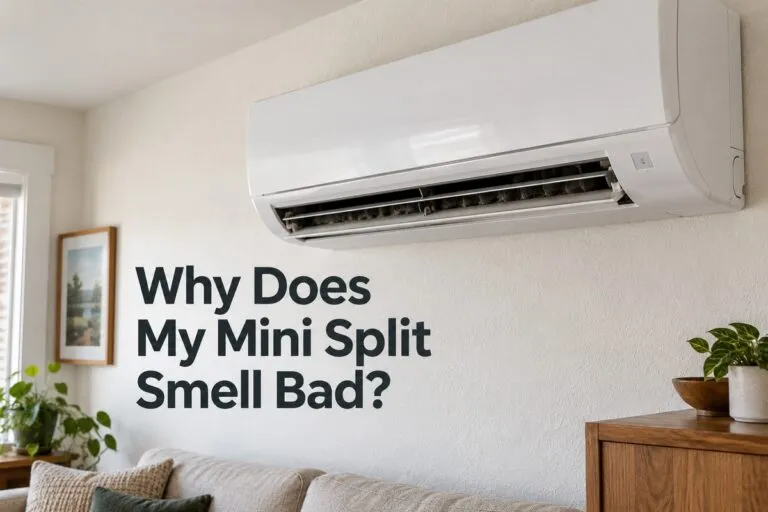
If you are asking, “Why does my mini split smell bad?” you are not alone. A stinky mini split is one of the most common calls we get from homeowners in Englewood and across the Denver Metro area. The good news is that most mini split odors have a simple cause and a clear fix.
In this article, we will walk through the most common reasons your ductless mini split smells, what each smell means, and when it is time to call a pro.
Common Reasons Your Mini Split Smells Bad
Mold and Mildew Growth
Mold is the number one reason a mini split smells bad. Your indoor unit pulls moisture out of the air when it cools. That moisture collects on the coil and inside the unit.
When the inside stays damp, mold and mildew can grow. The U.S. Environmental Protection Agency says mold can start growing within 24 to 48 hours when moisture is present. You can learn more on the EPA mold and moisture page.
A musty smell, like old towels or a damp basement, usually points to mold.
Dirty Air Filters
Mini split filters catch dust, pet hair, pollen, and cooking grease. Over time, all of that builds up and starts to smell.
A clogged filter also slows airflow. Slow airflow keeps the coil wet for longer, which helps mold grow even faster.
Clogged Condensate Drain Line
Your mini split has a small drain line that carries water outside. If it gets blocked by dirt, algae, or slime, water sits in the pan.
Standing water gives off a sour, swampy smell. You may also see water dripping from the indoor unit or notice a gurgling sound.
Dust and Debris on the Coil
The indoor coil is where cooling happens. Dust that gets past the filter sticks to the wet coil and turns into a sticky film.
This film holds odors and feeds bacteria. Many homeowners notice a dirty sock smell when the unit first turns on.
What Different Mini Split Smells Mean
Musty or Moldy Smell
This is the most common one. It usually means mold or mildew on the coil, blower wheel, or inside the drain pan.
You may notice it more when the unit starts up after sitting for a while.
Dirty Sock Smell
A dirty sock smell often comes from bacteria growing on a wet coil. It is common in homes that run their mini split in cooling mode for long stretches.
Cleaning the coil and blower usually clears it up.
Burning or Electrical Smell
A burning smell should never be ignored. It can come from dust burning off the heating element, but it can also point to a failing fan motor or loose wiring.
If the smell is strong or does not go away in a few minutes, turn the unit off at the breaker and call an HVAC company.
Rotten Egg Smell
A rotten egg smell is not normal for a mini split. Mini splits run on electricity, so this smell may be a natural gas leak somewhere else in your home or a dead pest in the wall or unit.
If you smell gas, leave the house right away and call your gas utility from outside.
Sewage or Sour Smell
A sour or sewage smell usually comes from the drain line. Stuck water and slime can build up and create a strong odor.
A clogged drain line can also cause leaks, which can damage walls and floors.
Why Mini Splits Get Smelly in the Denver Area
Dust and Pollen Load
Colorado has dry, dusty air for much of the year. Spring and summer also bring heavy pollen. All of that gets pulled into your indoor unit and onto the filter.
Homes near construction, busy roads, or open land often see filters fill up faster.
Big Temperature Swings
Denver weather can change fast. Your mini split may switch between heating and cooling in the same week.
These swings can leave moisture inside the unit, especially in spring and fall.
Pets, Cooking, and Everyday Living
Pet dander, cooking smoke, candles, and cigarette smoke can all stick to the filter and coil. Your mini split pulls in room air all day, so it also pulls in these smells.
How to Fix a Smelly Mini Split
Clean the Filters
This is the easiest fix and a good place to start. Here is how:
- Turn the unit off.
- Open the front panel and slide the filters out.
- Rinse them with lukewarm water and a little mild soap.
- Let them dry fully before putting them back.
Most manufacturers suggest cleaning filters every 2 to 4 weeks during heavy use.
Wipe the Indoor Unit
Use a soft, damp cloth to wipe the front cover and vents. Do not spray water inside the unit. Water can damage the circuit board and fan motor.
Run Fan Mode After Cooling
After a long cooling session, run the unit in fan mode for 20 to 30 minutes. This helps dry the coil and slows mold growth.
Some models also have a self-clean or dry mode. Check your owner’s manual to see if yours does.
Skip the DIY Coil Cleaning
Some store-bought sprays can leave residue or damage the coil. Deep cleaning also means taking parts of the unit apart, which is tricky and easy to get wrong.
If the smell comes back soon after cleaning the filters, the problem is likely deeper inside the unit.
When to Call a Professional
Signs You Need Help
Call an HVAC technician if you notice any of these:
- The smell comes back after cleaning the filters
- Water drips from the indoor unit
- You hear gurgling or see standing water
- You see black or green spots inside the unit
- A burning or electrical smell shows up
- Family members have more coughing, sneezing, or allergy symptoms when the unit runs
What a Professional Mini Split Cleaning Includes
A trained technician will take apart the indoor unit and clean the parts you cannot reach. This usually includes:
- Cleaning the coil with a safe, approved cleaner
- Washing the blower wheel
- Flushing the drain pan and drain line
- Checking the fan motor and electrical connections
- Testing airflow and cooling performance
Most manufacturers and HVAC pros suggest having your mini split professionally cleaned at least once a year.
How to Keep Your Mini Split from Smelling Again
Simple Habits That Help
A few small steps can keep your mini split fresh:
- Clean the filters on a regular schedule
- Run fan mode after cooling
- Keep furniture and curtains away from the indoor unit
- Keep pets off the area below the unit when possible
- Avoid smoking or heavy frying near the unit
Schedule Yearly Maintenance
A yearly tune-up catches small problems before they turn into smelly, costly ones. Spring is a great time to schedule it, before the summer cooling season starts.
Regular maintenance also helps your system run better, use less energy, and last longer.
A bad smell from your mini split is a sign that something needs attention, and the sooner you deal with it, the easier it is to fix. If your system is still smelling after you have cleaned the filters, the team at David’s HVAC is ready to help homeowners in Englewood, CO and all across the Denver Metro area. Reach out today to schedule a mini split cleaning or inspection and get your home smelling fresh again.