
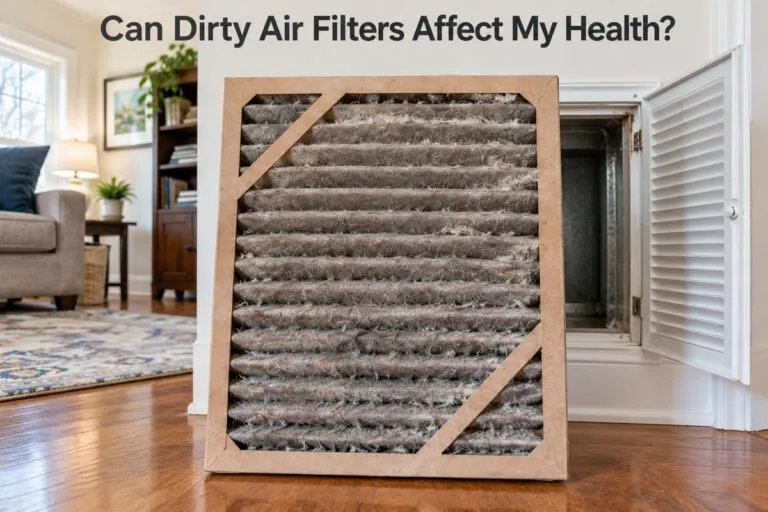
Yes, dirty air filters can affect your health. When your HVAC filter gets full of dust, pollen, and pet hair, it stops cleaning the air well. Those particles then float around your home, and you breathe them in all day. If you live in Englewood or anywhere in the Denver Metro area, knowing how your furnace filter and air conditioner filter affect indoor air quality can help your family breathe easier.
How a Dirty Air Filter Hurts Your Indoor Air
Your Filter Has a Big Job
Your HVAC system pulls in air from your home, cleans it, and sends it back out through your vents. The air filter catches dust, pollen, pet dander, and other tiny bits along the way. It also keeps those bits from building up inside your heating and cooling equipment.
What Happens When It Gets Full
A clean filter lets air pass through easily. A clogged filter cannot hold any more, so particles slip past it or get pushed back into your rooms. Your system also has to work harder to pull air through, which can make your home less comfortable and the air less fresh.
Health Problems Linked to Dirty Air Filters
Allergy Symptoms
Dust, pollen, and mold spores are common allergy triggers. When the filter is dirty, these triggers stay in the air longer. You may notice sneezing, itchy eyes, and a runny nose, especially indoors.
Asthma Flare-Ups
People with asthma can be sensitive to dust and dander. Poor indoor air can make coughing, wheezing, and chest tightness worse. A clean filter is one simple way to lower the number of triggers in your home.
Coughing, Dry Throat, and Headaches
Even healthy people can feel the effects of dusty air. Common signs include:
- A scratchy or dry throat
- A cough that will not go away
- Stuffy nose
- Headaches
- Tired or foggy feeling
Sleep and Energy
Dusty air can make it harder to breathe well at night. If you wake up stuffy or tired, your bedroom air may be part of the problem.
Facts About Indoor Air Quality
We Spend Most of Our Time Inside
According to the EPA, <a href=”https://www.epa.gov/report-environment/indoor-air-quality”>Americans spend about 90 percent of their time indoors</a>. That means the air inside your home matters a lot. Your HVAC filter is one of the main tools that keeps that air clean.
Indoor Air Can Be More Polluted Than Outdoor Air
The same EPA report says some pollutants can be 2 to 5 times higher indoors than outdoors. Many of these come from things inside the home, like dust, pet dander, cooking, and cleaning products. A dirty filter makes it harder for your system to clear them out.
A Dirty Filter Costs Money Too
The U.S. Department of Energy says swapping a clogged filter for a clean one can lower your system’s energy use by 5 to 15 percent. A clogged filter makes your system run longer and work harder. That can mean higher bills and more wear on your equipment.
Who Is Most at Risk?
Kids and Older Adults
The EPA notes that young children, older adults, and people with heart or lung disease often spend even more time indoors. They can also be more sensitive to poor air. Clean filters help protect them.
People with Allergies or Asthma
If someone in your home has allergies or asthma, a dirty filter can make symptoms worse. Changing your filter on time is an easy way to help.
Homes with Pets
Dogs and cats shed hair and dander every day. Pet hair can fill a filter fast. If you have pets, you will likely need to change your filter more often.
Signs Your Air Filter Is Too Dirty
What You Can See
Pull out your filter and hold it up to the light. If you cannot see light through it, it is time for a new one. Other signs include:
- Gray, fuzzy buildup on the filter
- Dust on your furniture soon after cleaning
- Dust around your vents
What You Can Feel
You may also notice changes in your home. Rooms may feel stuffy or have weak airflow. Some rooms may be too hot or too cold. Your family may have more sneezing or coughing at home than anywhere else.
How Often Should You Change Your Air Filter in Denver?
A Simple Schedule
Here are general guidelines for most homes:
- Standard 1-inch filters: every 1 to 3 months
- Thicker 4 to 5-inch filters: every 6 to 12 months
- Homes with pets: every 1 to 2 months
- Homes with allergy or asthma concerns: every 1 to 2 months
Always check your filter’s label and your system’s manual for the best fit.
Colorado Factors to Keep in Mind
Our area has a few things that can fill a filter faster. Dry air carries a lot of dust. Spring and summer bring pollen. Wildfire smoke can drift in during bad fire seasons. Home projects and construction nearby can add dust too. If any of these sound like your home, check your filter every month.
Tips to Keep Your Air Cleaner
Pick the Right Filter
Filters have a MERV rating. This number shows how well the filter traps small particles. A higher number catches smaller particles. Many homes do well with a MERV 8 to 13 filter. Some systems cannot handle very high ratings, because thicker filters can block airflow. Ask a technician which filter is right for your system.
Build Simple Habits
Small habits can make a big difference:
- Set a phone reminder to check your filter each month
- Keep extra filters at home so you never skip a change
- Vacuum often, especially if you have pets
- Wash bedding in hot water to cut down on dust mites
- Keep vents clear of furniture and rugs
Schedule Regular HVAC Maintenance
A yearly tune-up helps your furnace and air conditioner run well. A technician can check your filter size, clean parts, and look for problems that hurt air quality. If your home still feels dusty after you change the filter, you may need duct cleaning, a better filtration system, or an air purifier.
Dirty air filters can affect your health, your comfort, and your energy bills. The fix is simple. Check your filter often, change it on time, and keep your HVAC system in good shape.
If you need help with filter upgrades, indoor air quality, or HVAC maintenance in Englewood or the Denver Metro area, the team at David’s HVAC is ready to help. Call us today at davidshvac.com to schedule service and start breathing cleaner air at home.
Content reviewed and published according to the David's HVAC Editorial Team.