
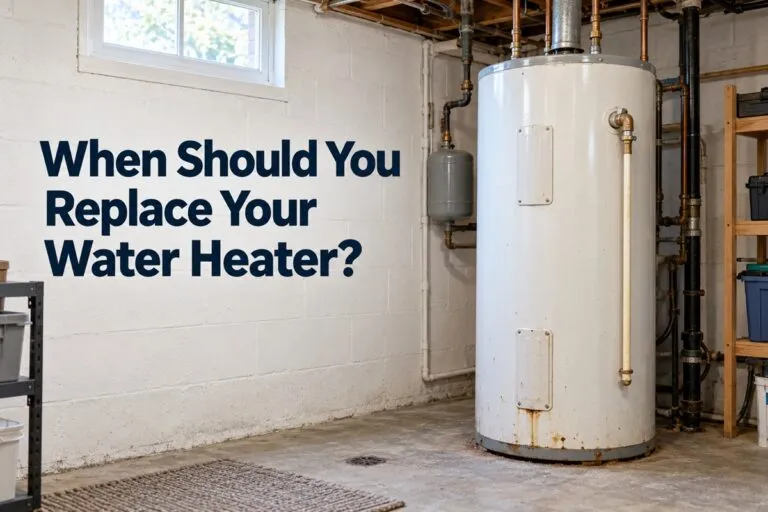
Knowing when to replace your water heater can save you from cold showers, big repair bills, and even a flooded basement. Most water heaters do not last forever. Over time, they wear out, and it helps to know the signs before one fails.
If you live in Englewood or the Denver Metro area, your water heater works hard all year. Cold Colorado winters make it work even harder. Here is how to tell when your old water heater has had enough.
How Long Does a Water Heater Last?
Every water heater has a life span. Age is one of the best clues for knowing when to replace it.
Tank Water Heaters
A traditional tank water heater usually lasts 8 to 12 years. With good care, some reach 15 years. After 10 years, the risk of leaks and failure goes up fast.
Tankless Water Heaters
A tankless water heater often lasts 20 years or more. These units heat water only when you need it. That means less wear and a longer life. They cost more up front, but they can last twice as long as a tank.
How to Find Your Water Heater’s Age
Look at the sticker on the side of your tank. Find the serial number. On many brands, the first letter shows the month (A for January, B for February, and so on). The next two numbers show the year.
For example, “D12” means April 2012. If your unit is over 10 years old, it is time to plan ahead.
Signs You Need a Water Heater Replacement
Your water heater will often give you warnings. Do not ignore them.
Rusty or Cloudy Water
Rusty water from your hot tap can mean the tank is rusting from the inside. If the cold water looks clean but the hot water looks brown, the tank may be failing.
Strange Noises
Popping, rumbling, or banging sounds are common signs of sediment. Sediment is minerals that settle at the bottom of the tank. The heater has to work harder to heat the water, and the tank wears out faster.
Leaks and Puddles
Water around the base of the tank is a serious warning. A small leak can turn into a big one with no notice. Tank leaks cannot be patched. If the tank itself is leaking, you need a new water heater.
Not Enough Hot Water
Does your hot water run out fast? Does it take longer to heat up than it used to? An aging heater may no longer keep up with your family’s needs.
Rising Energy Bills
Water heating makes up about 18 percent of the energy used in a typical home, according to the U.S. Department of Energy. An old, worn-out heater uses more energy to do the same job. If your bills keep climbing, your water heater may be to blame.
Frequent Repairs
One repair is normal. Two or three repairs in a short time is a sign the unit is wearing out. Fixing an old heater over and over costs more than replacing it.
Repair or Replace? How to Decide
Not every problem means you need a new water heater. Here is how to think it through.
When a Repair Makes Sense
A repair can be a good choice when:
- The heater is less than 8 years old
- The problem is a small part, like a thermostat or heating element
- The tank is not leaking or rusting
- The repair costs much less than a new unit
When Replacement Is Smarter
Replacement is usually the better choice when:
- The heater is 10 years old or older
- The tank is leaking
- You have had several repairs in a short time
- Your hot water bills keep going up
- The repair cost is more than half the price of a new unit
A simple rule many pros use: if the repair costs more than half the price of a new water heater, replace it.
Water Heater Replacement Cost in the Denver Area
Prices change based on the type, size, and brand. They also depend on how hard the install is.
Tank Water Heater Costs
A new tank water heater, installed, often costs between $1,200 and $3,500. Gas models and larger tanks usually cost more. Changing from one fuel type to another, or moving the heater, can add to the price.
Tankless Water Heater Costs
A tankless water heater often costs $2,500 to $6,000 or more installed. The price is higher, but you get a longer life and lower energy use. The Department of Energy says tankless models can be 24 to 34 percent more energy efficient than tank models for homes that use about 41 gallons of hot water a day or less. You can read more on the Department of Energy’s water heating page.
Why Waiting Can Cost More
A planned replacement is almost always cheaper than an emergency one. When a tank bursts, you may pay for water damage, drying, and repairs on top of the new heater. Replacing it early keeps you in control.
How to Help Your Water Heater Last Longer
A little care goes a long way. These simple steps can help you get the most years from your unit.
Flush the Tank Once a Year
Draining some water from the tank clears out sediment. This helps the heater work better and last longer. A technician can do this during a yearly checkup.
Check the Anode Rod
The anode rod is a metal rod inside the tank. It attracts rust so the tank does not rust instead. Over time, the rod wears away. Checking it every 2 to 3 years and replacing it when needed can add years to your heater’s life.
Set the Temperature to 120 Degrees
Many experts suggest 120 degrees Fahrenheit. It is safer, it saves energy, and it puts less stress on the tank.
Schedule a Yearly Inspection
A trained HVAC technician can spot small problems before they grow. A quick inspection each year can help you catch leaks, rust, or worn parts early.
What to Look for in a New Water Heater
When it is time for a new unit, a few choices will help you pick the right one.
Choose the Right Size
A heater that is too small will run out of hot water. One that is too big wastes energy. As a rough guide:
- 1 to 2 people: 30 to 40 gallons
- 3 to 4 people: 40 to 50 gallons
- 5 or more people: 50 to 80 gallons
Pick the Right Fuel Type
Most homes in the Denver area use natural gas or electric water heaters. Gas heaters often heat water faster. Electric models can be easier to install in some homes. Your current setup often helps decide the best fit.
Look at Energy Efficiency
Look for the ENERGY STAR label. Efficient models use less energy, which can lower your monthly bills. Heat pump water heaters are another option. They use much less electricity than standard electric models.
If your water heater is over 10 years old, leaking, or not keeping up, now is a good time to get it checked. The team at David’s HVAC helps homeowners in Englewood and across the Denver Metro area with water heater repair, replacement, and installation. Call us today to schedule a visit and get honest advice on whether to repair or replace your water heater.