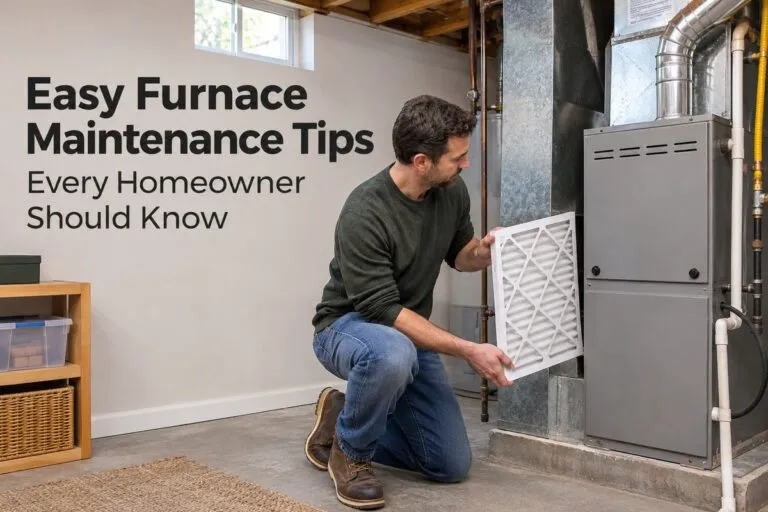
Easy furnace maintenance tips can help your home stay warm, your energy bills stay lower, and your system last longer. You do not need to be an expert to take care of the basics. A few simple checks each season can prevent many common heating problems.
This guide covers the jobs you can do yourself and the ones best left to a licensed HVAC technician. Follow these steps and your furnace will be ready when the cold weather hits.
Simple Furnace Maintenance Tasks You Can Do Yourself
Many furnace care tasks take only a few minutes. They need no special tools and cost very little.
Change or Clean the Furnace Filter
This is the easiest and most important job on the list. A dirty filter blocks airflow, so your furnace has to work harder to heat your home.
The U.S. Department of Energy says that replacing a dirty, clogged filter can lower your furnace’s energy use by 5 to 15 percent.
Here is a simple schedule to follow:
- Check your filter every month during heating season
- Replace a basic 1 inch filter every 1 to 3 months
- Replace it sooner if you have pets, allergies, or a dusty home
- Larger 4 to 5 inch filters often last 6 to 12 months
Turn the furnace off before you pull the old filter out. Look for the arrow on the new filter and point it toward the furnace.
Keep the Area Around Your Furnace Clear
Your furnace needs space to breathe. Boxes, paint cans, and laundry baskets should not sit next to it.
Most experts suggest keeping about 3 feet of open space around the unit. Never store anything flammable nearby. This includes gasoline, paint thinner, cleaning products, and cardboard.
A clear space also helps your technician reach the furnace quickly during a service visit.
Check Your Vents and Registers
Walk through your home and look at every vent. Make sure rugs, couches, and curtains are not blocking them.
Blocked vents make it hard for warm air to move through your home. This can cause cold rooms and extra strain on your furnace.
While you are there, do these quick steps:
- Vacuum dust from each register
- Open all vents fully
- Look for dirt or damage on the vent covers
How to Check Your Thermostat
Your thermostat tells your furnace when to turn on and off. If it does not work well, your home may never feel right.
Test It Before Winter
Turn the heat on at the start of fall, before you really need it. Set the temperature a few degrees above the room temperature. Your furnace should start within a few minutes.
If it does not turn on, try fresh batteries first. A weak battery is one of the most common reasons a thermostat acts up.
Use a Programmable or Smart Thermostat
A programmable thermostat can lower your heating costs without any extra work. The Department of Energy says you can save up to 10 percent a year by turning your thermostat back 7 to 10 degrees for 8 hours a day.
For example, you can lower the heat while you sleep or while you are at work. Then the thermostat warms your home again before you get back.
Signs Your Furnace Needs Attention
Your furnace often gives warning signs before it breaks down. Catching them early can save you money.
Strange Noises
Some sounds are normal, like a soft click when the furnace starts. Other sounds are not normal. Call a professional if you hear any of these:
- Banging or popping
- Squealing or screeching
- Rattling
- Grinding
Odd Smells
A light dusty smell is common the first time you turn the heat on each fall. It should go away within a few hours.
Other smells need quick action. A rotten egg smell can mean a gas leak. Leave your home right away and call your gas company or 911 from outside.
Uneven Heating and Rising Bills
Some rooms may feel colder than others. Your energy bill may also go up for no clear reason. These are signs your furnace is losing efficiency.
A technician can find the cause. It may be a dirty part, a weak blower, or a duct problem.
Carbon Monoxide Safety for Furnace Owners
Furnaces that burn gas or oil make carbon monoxide. This gas has no color and no smell, so you cannot detect it on your own. A cracked part or blocked vent can let it into your home.
Install and Test Carbon Monoxide Detectors
Place a detector near each sleeping area and on every level of your home. The U.S. Consumer Product Safety Commission offers helpful safety tips on where to put them.
Test your detectors every month. Change the batteries at least once a year. Most detectors also need to be replaced every 5 to 7 years.
Know the Warning Signs
Carbon monoxide can cause headaches, dizziness, nausea, and tiredness. If several people in your home feel sick at the same time, get outside into fresh air and call 911.
Check the Flue and Exhaust Pipe
Look at the pipe that carries exhaust out of your home. Make sure it is not blocked by snow, leaves, or a bird nest. Any damage should be checked by a professional.
Why Yearly Professional Furnace Tune-Ups Are Worth It
You can handle many small tasks on your own. Some parts of furnace care need a trained eye.
What a Technician Checks During a Tune-Up
A full furnace inspection usually includes:
- Testing the burners and flame
- Checking the heat exchanger for cracks
- Cleaning and adjusting key parts
- Inspecting the blower motor and belts
- Testing safety controls
- Checking gas pressure and connections
- Looking at the flue and venting
The heat exchanger is one of the most important parts to inspect. A crack can allow dangerous gas to leak.
The Best Time to Schedule Furnace Service
Fall is the best time for a tune-up. HVAC companies get very busy once the first cold snap arrives. Booking early gives you more choices and helps you avoid a heating breakdown on the coldest night of the year.
Many homeowners also choose a yearly maintenance plan. These plans often include priority scheduling and discounts on repairs.
How Furnace Maintenance Saves Money and Extends Furnace Life
A well-kept furnace costs less to run and lasts longer. Small steps now can prevent big repair bills later.
Lower Energy Bills
When your furnace runs clean, it uses less fuel to make the same amount of heat. Modern furnaces have an AFUE rating, which shows how much fuel becomes heat. Ratings range from about 80 percent to 98 percent.
Even a high-efficiency furnace loses that edge when it is dirty or worn out. Regular care helps it keep running close to its rated efficiency.
Fewer Repairs and Breakdowns
Most emergency furnace repairs start as small problems that were never fixed. A worn belt or dirty burner can turn into a full system failure.
A yearly tune-up helps your technician spot these issues early, when they are cheaper and easier to fix.
A Longer Furnace Lifespan
Most furnaces last about 15 to 20 years. Good care can help yours reach the top of that range. Neglect can shorten it by years.
If your furnace is over 15 years old and needs frequent repairs, ask a technician whether a replacement makes more sense.
Furnace Maintenance Checklist for Every Season
A simple routine makes furnace care easy to remember.
Fall Checklist
- Replace the filter
- Test the thermostat
- Schedule a professional tune-up
- Test carbon monoxide detectors
- Clear items away from the furnace
Winter Checklist
- Check the filter every month
- Keep vents open and clear
- Watch for odd sounds or smells
- Keep snow away from outdoor vents
Spring and Summer Checklist
- Replace the filter before the system sits unused
- Look for dust or moisture around the furnace
- Plan any repairs or upgrades before the next heating season
Taking care of your furnace does not have to be hard. A clean filter, clear vents, working safety alarms, and a yearly check from a pro go a long way toward a warm and safe home.
If you want help keeping your heating system in great shape, the team at David’s HVAC is ready to help. Reach out today to schedule your furnace tune-up before the cold weather arrives.