
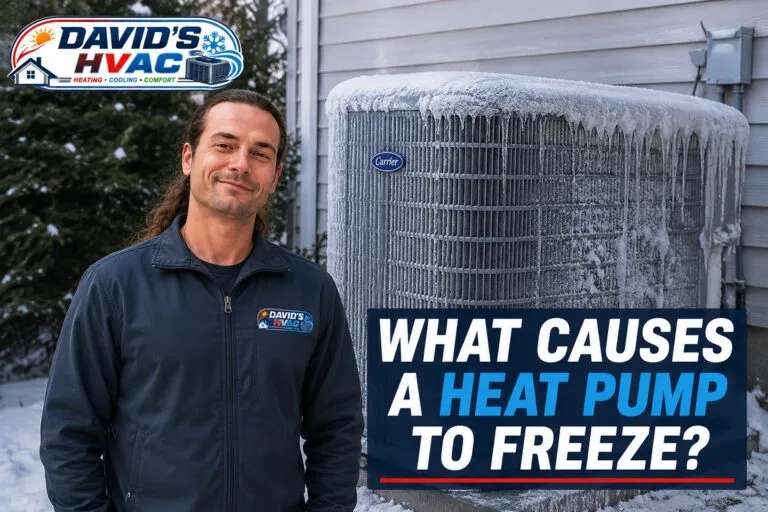
A heat pump can freeze for several reasons, and understanding what causes a heat pump to freeze can help homeowners prevent costly repairs and unexpected heating or cooling problems. While a light layer of frost is sometimes normal during colder weather, a heat pump that becomes covered in thick ice or stays frozen for an extended period usually indicates an underlying issue. Identifying the cause early can improve efficiency, reduce energy costs, and help your HVAC system continue operating reliably throughout the year.
Normal Frost Versus a Problem
Not every frozen heat pump is a reason to panic. During cold weather, moisture in the air naturally collects on the outdoor coil and can freeze. This is why heat pumps include a defrost cycle that periodically melts away frost buildup.
However, the situation becomes a concern when:
- Thick ice covers the entire outdoor unit.
- Ice remains on the unit long after the defrost cycle should have cleared it.
- The heat pump struggles to heat your home.
- The system runs continuously without reaching the thermostat setting.
- You notice unusually high energy bills.
When these symptoms appear, it is time to investigate the underlying cause.
Restricted Airflow Around the Outdoor Unit
One of the most common reasons a heat pump freezes is restricted airflow. The outdoor coil depends on proper airflow to transfer heat efficiently. When airflow is blocked, the coil becomes too cold, allowing moisture to freeze into ice.
Common airflow restrictions include:
- Leaves and debris around the unit
- Overgrown shrubs or landscaping
- Snow accumulation
- Dirt buildup on the outdoor coil
- Objects stored too close to the unit
Keeping at least two feet of open space around the outdoor unit helps maintain proper airflow and supports efficient operation throughout every season.
Dirty Air Filters Reduce System Performance
Although the outdoor unit is where freezing occurs, a dirty indoor air filter can contribute to the problem.
When airflow through the indoor system becomes restricted, the entire heat pump works harder. This imbalance can reduce heat transfer and allow temperatures inside the system to drop low enough for ice to develop.
Replacing air filters every one to three months helps improve airflow, supports energy efficiency, and reduces unnecessary strain on the equipment.
Low Refrigerant Levels
Low refrigerant is another leading cause of a frozen heat pump. Refrigerant absorbs and transfers heat, making it essential for proper system performance.
When refrigerant levels drop because of a leak, pressure inside the system also decreases. Lower pressure allows the coil temperature to fall below freezing, causing moisture to turn into ice.
Signs of low refrigerant may include:
- Ice forming on refrigerant lines
- Reduced heating or cooling performance
- Hissing or bubbling noises
- Longer operating cycles
- Increased utility bills
Because refrigerant systems are sealed, low refrigerant usually means there is a leak that requires professional repair.
A Malfunctioning Defrost Cycle
Heat pumps automatically enter defrost mode when frost begins accumulating on the outdoor coil. During this cycle, the system temporarily switches operation to melt accumulated ice.
If any part of the defrost system fails, ice continues building until the outdoor unit becomes completely frozen.
Potential defrost system problems include:
- Faulty defrost control board
- Defective temperature sensor
- Failed defrost thermostat
- Damaged reversing valve
- Electrical component failures
A professional HVAC technician can diagnose which component is preventing the defrost cycle from operating correctly.
Dirty Outdoor Coils
Outdoor coils collect dirt, dust, pollen, cottonwood, and other debris throughout the year.
When the coils become coated with grime, heat transfer becomes much less efficient. The colder coil surface allows frost to develop more rapidly, eventually creating heavy ice buildup.
Professional coil cleaning removes stubborn debris without damaging the delicate aluminum fins, restoring proper airflow and heat transfer.
Damaged or Bent Coil Fins
The thin metal fins on a heat pump are designed to maximize airflow across the coil.
If these fins become bent from hail, accidental impact, or improper cleaning, airflow decreases significantly. Reduced airflow makes freezing much more likely, especially during cold or humid weather.
Minor fin damage can often be corrected using specialized fin combs during professional maintenance.
Outdoor Fan Problems
The outdoor fan pulls air through the coil so the heat pump can exchange heat effectively.
If the fan motor fails or the fan blades become damaged, airflow drops dramatically. Without sufficient airflow, ice can quickly accumulate across the outdoor coil.
Signs of outdoor fan problems include:
- Fan not spinning
- Unusual grinding or rattling noises
- Slow fan speed
- Intermittent operation
- Overheating components
Ignoring fan issues can eventually lead to compressor damage, making timely repairs especially important.
Extremely Cold Weather
Heat pumps are designed to operate efficiently in cold temperatures, but severe winter conditions can still increase frost formation.
Periods of freezing rain, heavy snowfall, and prolonged humidity often cause frost to accumulate faster than usual. In these situations, the defrost cycle may run more frequently, which is generally normal.
However, if thick ice completely covers the outdoor unit for many hours, professional inspection is recommended.
Blocked Drainage During Defrost
During the defrost cycle, melted ice needs somewhere to go.
If drainage paths become blocked by dirt, leaves, or ice, the water can refreeze before leaving the unit. Over time, additional layers of ice develop, eventually surrounding the entire outdoor section.
Regular maintenance helps keep drainage passages clear and functioning properly.
Thermostat Issues
Although less common, thermostat problems can contribute to freezing issues.
An improperly calibrated thermostat or incorrect operating settings may cause the heat pump to run longer than necessary. Extended run times can increase frost accumulation, particularly during cold weather.
Checking thermostat settings and replacing weak batteries are simple first steps before scheduling professional service.
Electrical Component Failures
Heat pumps rely on numerous electrical components working together.
A faulty capacitor, relay, sensor, or control board can interfere with normal operation and prevent the system from responding correctly to changing conditions.
Electrical issues often require specialized diagnostic equipment to identify the exact source of the problem.
Warning Signs You Should Not Ignore
Recognizing early symptoms can help prevent larger repairs.
Watch for these warning signs:
- Thick ice covering the outdoor unit
- Ice on refrigerant lines
- Weak airflow inside the home
- Uneven indoor temperatures
- Rising heating or cooling costs
- Constant system operation
- Strange noises during operation
- Water leaking around the unit after thawing
Prompt service can often prevent small issues from becoming major repairs.
What You Should Do If Your Heat Pump Freezes
If you notice excessive ice, avoid attempting to chip or scrape it away. The aluminum fins and refrigerant coils are easily damaged.
Instead:
- Turn the thermostat to the appropriate setting.
- Check and replace a dirty air filter.
- Remove leaves, snow, or debris around the outdoor unit.
- Make sure supply and return vents inside your home remain open.
- Allow the defrost cycle time to operate.
- Contact an HVAC professional if the ice does not disappear.
Using sharp tools or pouring hot water onto the unit can cause expensive damage.
How Professional Maintenance Helps Prevent Freezing
Routine HVAC maintenance is one of the most effective ways to reduce the risk of recurring freezing problems.
During a maintenance visit, technicians typically:
- Inspect refrigerant levels
- Test the defrost cycle
- Clean indoor and outdoor coils
- Check electrical components
- Measure airflow
- Inspect fan motors
- Replace or recommend air filters
- Verify thermostat operation
Preventive maintenance not only reduces the chance of freezing but also improves efficiency, extends equipment lifespan, and lowers operating costs.
Can You Prevent a Heat Pump From Freezing?
Many freezing issues are preventable with regular care and attention.
Homeowners can help by:
- Changing air filters regularly
- Keeping the outdoor unit free of debris
- Trimming nearby vegetation
- Removing excessive snow around the unit
- Scheduling annual HVAC maintenance
- Addressing unusual noises or performance changes promptly
- Watching for signs of refrigerant leaks
These simple steps help keep the system operating efficiently throughout both the heating and cooling seasons.
If your heat pump continues freezing despite basic maintenance, professional diagnosis is the safest solution. Many issues, including refrigerant leaks, defrost system failures, electrical problems, and airflow restrictions, require specialized equipment and training to repair correctly. For homeowners in the Denver Metro area, timely HVAC service can restore reliable performance, improve energy efficiency, and help prevent more expensive repairs down the road. If your heat pump is freezing repeatedly or not keeping your home comfortable, the experienced team at David’s HVAC is ready to inspect the system, identify the root cause, and recommend the right solution to keep your home comfortable year-round.
Content reviewed and published according to the David's HVAC Editorial Team.