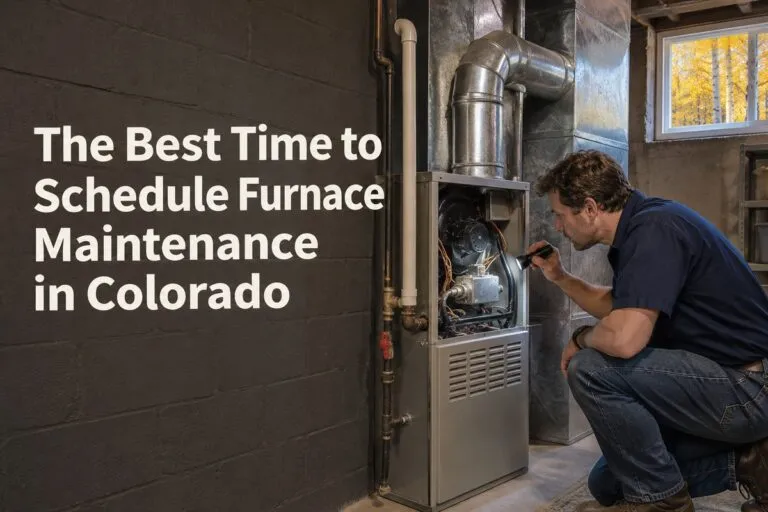
The best time to schedule furnace maintenance in Colorado is early fall, ideally September or early October. That is before the first hard freeze and before HVAC companies get busy. A fall furnace tune-up helps your system start the cold season clean, safe, and ready to work.
Colorado winters can be long and harsh. Your furnace works hard from October through April in many parts of the state. Here is when to book service, why timing matters, and what to expect.
When to Schedule Furnace Maintenance in Colorado
September and Early October Is the Sweet Spot
In the Denver area, the first freeze often shows up around early to mid October. In the mountains, it can come much sooner. Cold nights can arrive while days still feel warm.
Booking in September or early October gives you time to fix problems before you need heat every day. You also get more choices for appointment times.
Colorado Weather Can Change Fast
Colorado is known for quick swings in weather. A 70 degree afternoon can turn into a snowy night. A furnace that has sat unused for months may not be ready for that jump.
A tune-up before the weather turns means you will not find out about a problem on the coldest night of the year.
Mountain Towns Should Book Even Earlier
If you live in the foothills or the high country, plan for late August or early September. Snow can fall in these areas as early as September. Furnaces in higher towns also run longer each year, so they need extra care.
Why Fall Is Better Than Winter for Furnace Service
HVAC Companies Fill Up Fast in Winter
When the first big cold snap hits, phones start ringing. Many homeowners wake up to a cold house and need help right away. Emergency calls come first, so routine maintenance visits get pushed back.
Fall is calmer. You can pick a day and time that works for you.
Small Problems Are Easier to Fix Early
A worn part or a dirty burner is a small job in the fall. If it is ignored, it can turn into a breakdown in January. Repairs during a cold snap can also cost more, since parts may be harder to get.
Here are a few things a technician can catch early:
- A cracked or worn igniter
- A dirty flame sensor
- A clogged filter
- Loose wires or belts
- A cracked heat exchanger
You Can Plan Your Budget
Fall service lets you plan for repairs instead of reacting to an emergency. If your furnace is old, you can also talk about replacement options calmly. You do not have to make a rushed choice in freezing weather.
How Colorado’s Climate Affects Your Furnace
High Altitude Changes How Furnaces Work
Denver sits about 5,280 feet above sea level. The air is thinner here, so there is less oxygen for your furnace to burn gas. Gas furnaces are typically adjusted for higher elevations, and the usual rule is to reduce the gas input by about 4 percent for every 1,000 feet above 2,000 feet.
That means a furnace in Colorado needs the right settings to burn safely and well. A yearly check helps make sure yours is set up correctly for your altitude.
Long Heating Seasons Mean More Wear
Many Colorado homes run their furnaces for six or seven months each year. The longer a furnace runs, the more wear it gets on the blower, the burners, and the controls.
Dry air and dust are also common here. Dust builds up inside a furnace and makes it work harder. Yearly cleaning helps slow that wear.
Furnace Lifespan in Colorado
Most furnaces last around 15 to 20 years with good care. Skipping service can shorten that time. A well-kept furnace can keep running strong for many winters.
What Happens During a Furnace Tune-Up
What the Technician Checks
A furnace maintenance visit is more than a quick look. A trained technician will go through the whole system. A typical visit includes:
- Checking the thermostat settings
- Cleaning the burners and flame sensor
- Testing the igniter and safety switches
- Inspecting the heat exchanger for cracks
- Checking the blower motor and belts
- Looking at the flue and venting
- Testing for carbon monoxide leaks
- Changing or checking the air filter
How Long It Takes
Most furnace tune-ups take about 45 minutes to an hour. Older or dirtier systems may take a little longer. Plan to be home so the technician can get to the furnace and talk with you about what they find.
What You Can Do Before the Visit
You can help the visit go smoothly with a few small steps:
- Clear a few feet of space around the furnace
- Replace the filter if it looks dirty
- Write down any strange sounds or smells you noticed last winter
- Make sure the technician can reach the thermostat
Safety and Savings From Yearly Furnace Maintenance
Carbon Monoxide Is a Real Risk
Carbon monoxide is a gas you cannot see or smell. A cracked heat exchanger or a blocked vent can let it into your home. The CDC says hundreds of people in the United States die each year from accidental carbon monoxide poisoning.
Furnace maintenance includes safety checks that help catch these problems early. Colorado law also requires carbon monoxide alarms in homes. Test yours each fall, and replace the batteries when needed.
Lower Energy Bills and Better Comfort
A clean furnace does not have to work as hard. That can help it use less gas and heat your home more evenly. Many homeowners notice fewer cold spots after a tune-up.
With heating bills rising in many areas, even a small gain in efficiency is worth it.
Keep Your Warranty Valid
Many furnace makers ask for yearly maintenance to keep the warranty in place. If a part fails and you cannot show service records, the maker may refuse to cover it. Keep your receipts from each visit in a safe spot.
Signs You Should Not Wait for Fall
Warning Signs of Furnace Trouble
Some problems should not wait. Call for furnace service right away if you notice any of these:
- Loud banging, rattling, or squealing sounds
- A yellow or flickering burner flame
- A burning or rotten egg smell
- Rising heating bills with no clear reason
- A furnace that turns on and off too often
- Uneven heat from room to room
When to Stop and Call Right Away
If you smell gas, leave your home and call your gas company from outside. If your carbon monoxide alarm sounds, get everyone outside and call 911. Do not try to fix these problems yourself.
Scheduling furnace maintenance in Colorado before the cold arrives is one of the easiest ways to protect your home and your family. Book your tune-up in September or early October, and you will avoid the winter rush, catch small problems early, and stay warm all season. If you are ready to schedule furnace service, call our team today and get on the calendar before the first freeze.