
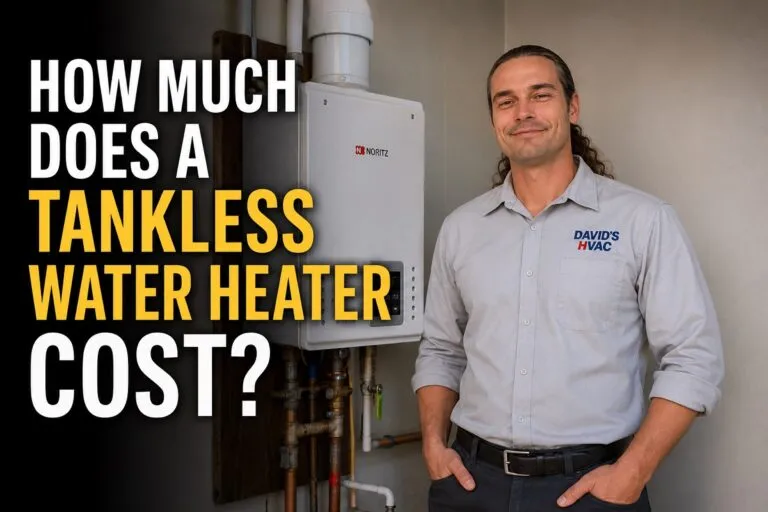
If you’re wondering how much a tankless water heater costs, the answer depends on several factors, including the size of your home, the type of fuel, installation requirements, and the condition of your existing plumbing. While the upfront investment is typically higher than a traditional storage tank water heater, many homeowners in the Denver Metro area find that the long term energy savings, endless hot water, and longer lifespan make it a worthwhile upgrade. Understanding the total cost can help you make an informed decision before scheduling installation.
Average Tankless Water Heater Cost
The total cost of a tankless water heater includes both the equipment and professional installation. Prices vary depending on the brand, capacity, efficiency rating, and the complexity of the installation.
On average, homeowners can expect the following price ranges:
- Tankless water heater unit: $800 to $2,500
- Professional installation: $1,000 to $3,500
- Total installed cost: $1,800 to $6,000+
Larger homes with higher hot water demands may require a higher capacity unit, which increases the overall cost. Homes that need gas line upgrades, electrical modifications, or venting changes may also see higher installation expenses.
Factors That Affect Tankless Water Heater Cost
Several variables influence the final price of a tankless water heater installation.
Type of Fuel
Gas and electric tankless water heaters have different installation requirements.
Natural gas models typically cost more to install because they often require:
- Gas line upgrades
- New venting systems
- Higher installation labor
Electric tankless water heaters generally have lower installation costs, but they may require electrical panel upgrades if your home’s electrical system cannot support the additional load.
Unit Size
Choosing the correct size is essential for both performance and efficiency.
Larger households often need higher flow rates to support multiple showers, appliances, and faucets running at the same time. Higher capacity units cost more but help prevent running out of hot water during peak usage.
Installation Complexity
Every home is different, and installation costs can vary significantly.
Factors that may increase labor costs include:
- Replacing outdated plumbing
- Relocating the unit
- Installing new gas piping
- Upgrading venting
- Electrical work
- Meeting local building codes
An experienced HVAC and plumbing contractor can inspect your home and provide an accurate estimate before work begins.
Cost Comparison Between Tankless and Traditional Water Heaters
Many homeowners compare tankless water heaters with standard storage tank models before deciding.
| Feature | Tankless Water Heater | Traditional Tank Water Heater |
|---|---|---|
| Initial Cost | Higher | Lower |
| Operating Cost | Lower | Higher |
| Energy Efficiency | Excellent | Moderate |
| Lifespan | 15 to 20 years or more | 8 to 12 years |
| Hot Water Supply | Continuous | Limited by tank size |
| Space Required | Minimal | Larger footprint |
Although a tankless water heater costs more initially, its longer lifespan and lower operating costs often offset the higher purchase price over time.
Installation Costs in the Denver Metro Area
Installation costs in the Denver Metro area can vary depending on your home’s layout and existing utilities.
Professional installers will evaluate factors such as:
- Existing gas or electrical connections
- Water line configuration
- Ventilation requirements
- Local permit requirements
- Accessibility of the installation location
Homes with older plumbing systems may require additional updates before installing a new tankless water heater.
Hiring an experienced contractor helps ensure the system operates safely, efficiently, and complies with local codes.
Are Tankless Water Heaters Worth the Cost?
For many homeowners, the answer is yes.
A tankless water heater provides several benefits that can justify the higher upfront investment.
These include:
- Endless hot water for showers and appliances
- Lower monthly energy bills
- Longer equipment lifespan
- Reduced standby heat loss
- Compact design that saves space
- Lower maintenance compared to aging storage tanks
Families with high daily hot water usage often experience the greatest long term value.
Additional Costs to Consider
The quoted installation price may not include every potential expense.
Depending on your home’s needs, additional costs could include:
- Water line modifications
- Gas line upgrades
- Electrical panel upgrades
- Expansion tanks
- Water softener installation
- Condensate drainage
- Permit and inspection fees
Your installer should explain any additional work before beginning the project.
Can a Tankless Water Heater Lower Energy Bills?
One of the biggest reasons homeowners choose tankless systems is energy efficiency.
Unlike traditional storage tanks that continuously heat stored water throughout the day, tankless water heaters only heat water when it is needed.
This can reduce energy consumption because the unit eliminates standby heat loss.
Actual savings depend on factors such as:
- Household size
- Daily hot water usage
- Utility rates
- Type of fuel
- Water heater efficiency rating
While every home is different, many homeowners notice lower utility bills after switching to a properly sized tankless system.
Choosing the Right Tankless Water Heater
Price should not be the only factor when selecting a system.
A properly sized and professionally installed unit delivers better performance and longer service life.
When comparing options, consider:
- Household size
- Number of bathrooms
- Peak hot water demand
- Fuel availability
- Energy efficiency ratings
- Manufacturer warranty
- Maintenance requirements
An HVAC professional can calculate the correct flow rate and recommend the best system for your home’s needs.
How Long Does a Tankless Water Heater Last?
A well maintained tankless water heater can often last 15 to 20 years or longer.
Routine maintenance helps maximize its lifespan and efficiency.
Recommended maintenance includes:
- Annual system inspection
- Flushing mineral buildup
- Cleaning inlet filters
- Checking burners or heating elements
- Inspecting venting and safety components
Homes with hard water may benefit from more frequent maintenance to reduce mineral accumulation inside the heat exchanger.
Signs It May Be Time to Replace Your Water Heater
If your current water heater is showing signs of age, upgrading to a tankless model may be a smart investment.
Common signs include:
- Rising energy bills
- Inconsistent hot water
- Rusty or discolored water
- Water leaks around the unit
- Frequent repairs
- Running out of hot water too quickly
- Water heater is over 10 years old
Replacing an aging system before it fails completely can help avoid unexpected emergencies and water damage.
If you’re considering a tankless water heater for your Denver Metro home, working with an experienced installer can help ensure you receive the right size system, an accurate installation estimate, and dependable performance for years to come. At David’s HVAC, we help homeowners throughout the Denver Metro area choose energy efficient water heating solutions that fit their home’s needs and budget. Whether you’re replacing an older water heater or installing a tankless system for the first time, our team can provide expert guidance, professional installation, and reliable service to help you get the most value from your investment.
Content reviewed and published according to the David's HVAC Editorial Team.