
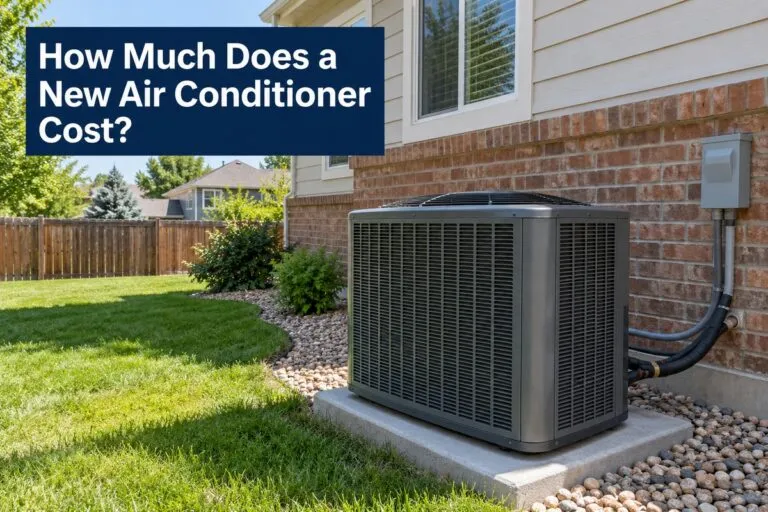
How much does a new air conditioner cost in Englewood, CO, and the Denver Metro area? The price depends on the equipment you choose, your home’s cooling needs, and the work required to install it. As a broad reference, Carrier lists an installed price range of $3,000 to $15,000 for a 3-ton central air conditioner.
That is a general manufacturer estimate, not a quote for your home. A straightforward AC replacement and a first-time central air installation can involve very different amounts of work.
Understanding what goes into an estimate helps you budget realistically, compare contractors, and avoid paying for equipment or upgrades you do not need.
What Determines the Cost of a New Air Conditioner?
The total air conditioning installation cost includes more than the outdoor unit. Equipment selection, labor, existing infrastructure, and installation requirements all affect your final price.
Air Conditioner Size and Cooling Capacity
A larger-capacity air conditioner generally costs more than a comparable smaller model. However, choosing the right size requires more than matching your old equipment or looking at square footage.
A professional cooling load calculation considers factors such as:
- Insulation and air leakage.
- Window size, condition, and sun exposure.
- Ceiling heights and home layout.
- Local summer design temperatures.
- Heat entering through walls and the roof.
For reference, a 3-ton air conditioner provides 36,000 BTUs of nominal cooling capacity per hour. That number alone does not determine whether it fits your home. A professional Manual J load calculation helps establish the appropriate size.
For an Englewood homeowner, the useful question is: “What calculation supports the size in this estimate?” Buying extra capacity without a demonstrated need can increase your upfront expense.
Efficiency Rating and Equipment Features
Higher-efficiency equipment often carries a higher purchase price. When comparing new systems, look at their SEER2 ratings, which describe seasonal cooling efficiency under standardized testing.
Compare the rating for the complete equipment combination being installed. An outdoor unit’s advertised maximum efficiency may depend on the indoor components paired with it.
The U.S. Department of Energy emphasizes that installation quality affects performance. Oversizing, incorrect refrigerant charging, and leaky ducts can undermine efficiency and comfort. Paying for a higher rating makes less sense if installation problems prevent the system from performing properly.
Compressor Options
Compressor design also influences price and comfort:
- Single-stage systems generally have a lower initial equipment cost and operate at one cooling output when running.
- Two-stage systems offer two operating levels, giving the equipment more flexibility as cooling demand changes.
- Variable-speed systems adjust output across a wider range and typically cost more upfront.
Ask what practical benefit each upgrade offers in your home. A premium system may be appealing for temperature control or quieter operation, but those benefits should be weighed against its additional cost.
AC Replacement vs. First-Time Installation Costs
Two homes choosing similar equipment can receive substantially different installation estimates because their starting conditions are different.
Replacing an Existing Central Air Conditioner
An existing central AC system gives the contractor infrastructure to evaluate for possible reuse. That can include ductwork, electrical service, equipment supports, and the refrigerant line route.
Ask the contractor to identify which components can remain and which need replacement. An estimate should explain whether the project includes the indoor coil, outdoor unit, thermostat, and any necessary connection changes.
Do not assume that every existing component is suitable simply because it worked with the old system.
Adding Central Air for the First Time
A first-time installation may involve additional work to provide electrical power, route refrigerant lines, manage condensation, and accommodate indoor cooling equipment.
If your home already has forced-air heating, ask whether the existing ductwork and blower can support the proposed cooling system. Having heating ducts does not by itself establish that no modifications are needed.
For a home without suitable ducts, request separate pricing for the cooling equipment and the air distribution work. That makes the project’s largest expenses easier to understand.
Additional Expenses to Check Before Approving an Estimate
An attractive advertised equipment price may cover only part of the project. Ask whether the written total includes the following items.
Ductwork Repairs or Modifications
Have the contractor explain any proposed duct changes and the problem they address. Useful questions include:
- Are there damaged or disconnected ducts?
- Is additional return airflow needed?
- Will the existing ducts support the selected equipment?
- Does the proposal include sealing, insulation, or replacement?
- Are comfort problems concentrated in particular rooms?
A new air conditioner should not be presented as an automatic solution to every hot room. Ask how the proposed work addresses the cause of uneven cooling.
Electrical Work and Equipment Connections
Request confirmation that the estimate accounts for the new equipment’s electrical requirements. If electrical changes are needed, ask whether they are included in the HVAC contract or require a separate contractor.
Also clarify the scope for refrigerant piping, condensate drainage, equipment supports, and thermostat wiring. These details can explain why one installation quote is higher than another.
Permits, Removal, and Startup Testing
Ask who handles any required permits and inspections for your property’s jurisdiction. Confirm whether those fees are included.
The proposal should also address removal of old equipment, refrigerant recovery, cleanup, and startup testing. A complete estimate makes these responsibilities clear before installation day.
Is a Higher-Efficiency Air Conditioner Worth the Extra Cost?
The financial value of an efficiency upgrade depends on the additional purchase price and the electricity savings your household actually achieves.
Ask for an estimate based on your home, local electricity rates, and expected cooling use. A savings projection based on a substantially hotter climate may not reflect your Denver-area operating costs.
Compare the Upgrade Price With Estimated Annual Savings
Consider this hypothetical example:
- Standard system installed price: $8,000.
- Higher-efficiency system installed price: $10,000.
- Additional upfront cost: $2,000.
- Estimated annual electricity savings: $200.
The simple payback would be 10 years, calculated by dividing $2,000 by $200. If annual savings were only $100, the payback would extend to 20 years.
These figures illustrate the calculation, not local pricing or promised savings. They also exclude financing costs, maintenance differences, and changes in electricity rates.
Comfort and noise reduction may still justify an upgrade. The key is understanding which benefits you are buying.
Do You Need to Replace the Furnace With the Air Conditioner?
Not necessarily. Replacing the air conditioner does not automatically mean replacing a functioning furnace.
The decision depends on the furnace’s condition, its compatibility with the proposed cooling equipment, and how the components work together. David’s HVAC evaluates the existing equipment before recommending whether both systems need replacement.
If a contractor recommends replacing both, request two clearly explained options when technically feasible:
- AC replacement while retaining the existing furnace.
- Combined furnace and AC replacement.
Compare the additional expense, equipment condition, warranty coverage, and any installation savings from completing both projects together.
Should You Repair Your AC or Pay for Replacement?
Before committing to a new air conditioner, get a diagnosis of the existing system. A repairable problem does not automatically justify a full replacement.
Ask for the repair price alongside the replacement proposal. Then consider:
- Whether the problem is isolated or part of repeated failures.
- Whether applicable warranty coverage reduces the repair expense.
- Whether the system has been cooling the home adequately.
- Whether the repair addresses the underlying problem.
- How much additional money you are comfortable investing in the equipment.
At David’s HVAC, we recommend repair when it can safely and reliably resolve the problem and makes sense for the homeowner. Replacement should come with a clear explanation of why it offers better value.
How to Compare Air Conditioning Installation Quotes
The lowest total is only meaningful when you know what each contractor includes. Ask for written proposals that make these details easy to compare:
- Equipment: Manufacturer, model numbers, and cooling capacity.
- Efficiency: SEER2 rating for the proposed equipment combination.
- Installation scope: Indoor coil, piping, electrical work, drainage, and duct modifications.
- Project expenses: Permits, removal, cleanup, and applicable taxes.
- Warranty: Parts coverage, labor coverage, exclusions, and registration requirements.
- Completion: Expected schedule and startup verification.
- Total price: Included work and circumstances that could create additional charges.
If you finance the installation, compare the total repayment amount as well as the monthly payment. Ask about interest, fees, and promotional terms before choosing an offer.
Also request separate prices for optional accessories. This helps you distinguish necessary installation work from upgrades you can evaluate independently.
A new air conditioner should fit your home, comfort needs, and budget. David’s HVAC provides AC installation and replacement in Englewood and the Denver Metro area, with clear explanations of your equipment options. To find out what a new air conditioner would cost for your property, contact David’s HVAC or call 720-306-1598.
Content reviewed and published according to the David's HVAC Editorial Team.