
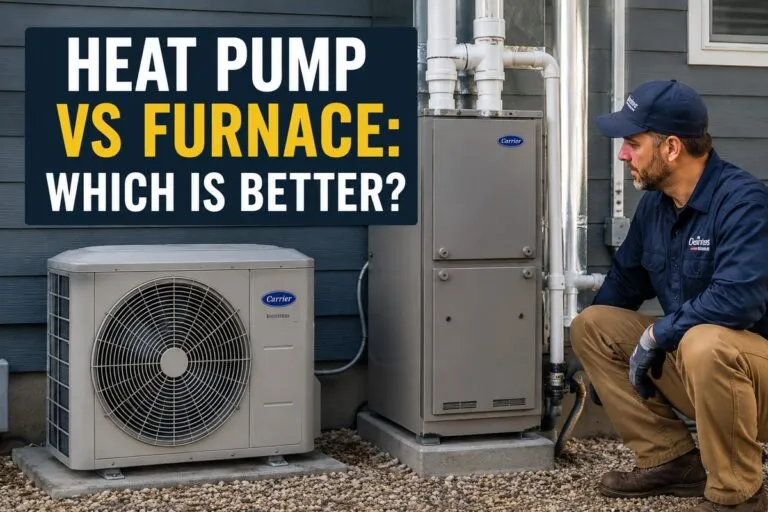
Heat pump vs furnace is an important comparison for homeowners in Englewood, CO and throughout the Denver Metro area who are considering a new heating system or replacing aging HVAC equipment. Both options can keep a home comfortable through Colorado winters, but they operate differently and can have significant differences in energy use, heating performance, installation costs, cooling capabilities, and long-term operating expenses.
The better choice depends on your home, existing HVAC system, access to natural gas, comfort preferences, and energy-efficiency goals. Colorado’s changing temperatures also make proper equipment sizing and system selection especially important.
Heat Pump vs Furnace: The Main Differences
When comparing a heat pump and furnace, one of the biggest differences is how each system produces heat.
A furnace creates heat. A natural gas furnace burns fuel and transfers the resulting heat into the air circulating through the home’s ductwork. Electric furnaces use electric heating elements instead of combustion.
A heat pump transfers heat rather than creating it through combustion. During heating mode, the system extracts heat from the outdoor air and transfers it inside. Modern cold-climate heat pumps are designed to continue operating even when outdoor temperatures drop well below freezing.
There are several practical differences homeowners should consider:
- Heat pumps can provide both heating and air conditioning.
- Furnaces are dedicated heating systems and typically require a separate air conditioner for cooling.
- Heat pumps primarily use electricity.
- Gas furnaces use natural gas plus electricity for the blower and controls.
- Heat pumps can be highly energy efficient because they move heat instead of generating it directly.
- Furnaces can provide strong heating output during extremely cold weather.
- Heat pump performance depends heavily on proper sizing and equipment selection.
Neither system is automatically the right choice for every Denver-area home.
Heating Performance During Colorado Winters
Heating performance is understandably one of the biggest concerns when choosing between a heat pump and furnace in Colorado.
Furnace Heating Performance
Gas furnaces are known for producing strong, consistent heat regardless of how cold it becomes outside. That makes them a familiar choice throughout the Denver Metro area.
A properly sized furnace can quickly raise indoor temperatures after the thermostat is adjusted. Furnaces also generally supply warmer-feeling air from the vents than heat pumps.
For homeowners who prefer that traditional blast of warm air or who have homes with high heating demands, a furnace can be an excellent option.
Heat Pump Heating Performance
Modern heat pump technology has improved considerably. Cold-climate heat pumps can operate efficiently at temperatures that would have been challenging for older systems.
A heat pump usually operates differently from a furnace. Instead of producing short bursts of very hot air, it may run for longer periods while maintaining a more consistent indoor temperature.
That longer runtime is not necessarily a sign that the system is wasting energy. Heat pumps are designed to maintain comfort through steady operation.
Equipment selection matters, however. A heat pump that is incorrectly sized or not designed for colder conditions may struggle during periods of very low outdoor temperatures.
Heat Pump vs Furnace Efficiency
Energy efficiency is one of the strongest reasons homeowners consider installing a heat pump.
Because heat pumps transfer existing heat instead of creating all their heat from fuel or electric resistance, they can deliver considerably more heating energy than the electricity they consume.
Furnace efficiency is typically expressed using AFUE, or Annual Fuel Utilization Efficiency. A higher AFUE percentage indicates that more of the fuel consumed by the furnace is converted into usable heat.
Heat pump efficiency is measured differently, commonly using ratings such as HSPF2 for heating performance and SEER2 for cooling performance.
Comparing these ratings directly does not provide a complete answer because heat pumps and furnaces use different energy sources and operating methods. Homeowners should consider overall operating costs rather than simply comparing efficiency numbers.
Which System Costs Less to Operate?
There is no universal answer to whether a heat pump or furnace will have lower monthly heating costs.
Operating expenses depend on:
- Electricity rates
- Natural gas prices
- Outdoor temperatures
- Home insulation
- Air leakage
- Thermostat settings
- HVAC system efficiency
- Equipment sizing
- Ductwork condition
- Amount of heating required
A high-efficiency heat pump may provide significant energy savings under the right conditions. However, homes with relatively inexpensive natural gas and high winter heating demands may find that a gas furnace remains competitive.
Your existing HVAC setup matters too. Replacing an existing gas furnace with another furnace can be a very different project from converting the entire home to a heat pump.
Heat Pumps Provide Heating and Cooling
One of the biggest advantages in the heat pump vs furnace comparison is that a heat pump handles two jobs.
During winter, it moves heat into your home. During summer, the refrigeration cycle reverses and the system moves heat out of your home, essentially operating like a central air conditioner.
That means one heat pump system can provide:
- Winter heating
- Summer air conditioning
- Temperature control throughout the year
- Potentially fewer separate pieces of HVAC equipment
A furnace only provides heat. Most Denver Metro homeowners with a furnace also have a separate central air conditioning system for summer cooling.
If both your furnace and air conditioner are approaching replacement age, switching to a heat pump may be particularly worth considering.
Upfront Cost of a Heat Pump vs Furnace
Installation price is another major factor when choosing HVAC equipment.
The cost of either system can vary significantly based on equipment capacity, efficiency, installation requirements, ductwork, electrical upgrades, and the existing HVAC configuration.
Heat Pump Installation Costs
A heat pump installation may cost more upfront than simply replacing an existing furnace, particularly when electrical work or other system modifications are necessary.
However, the comparison should consider the complete HVAC system.
If you need both a new furnace and a new air conditioner, comparing the combined cost of those two systems against a heat pump provides a more useful picture than comparing a heat pump against a furnace alone.
Furnace Installation Costs
Replacing an existing gas furnace with another compatible furnace can sometimes be relatively straightforward because the home already has the necessary gas line, ductwork, electrical connections, and venting infrastructure.
Installation requirements still vary from house to house. Furnace size, efficiency, venting modifications, ductwork condition, and other factors can affect the final cost.
Heat Pump vs Furnace Comfort
Both systems can maintain a comfortable home when properly selected, installed, and maintained, but the heating experience can feel different.
A furnace typically produces hotter supply air and operates in more noticeable heating cycles. You may hear the furnace start, feel warmer air from the registers, and then notice it shut down after reaching the thermostat setting.
Heat pumps often provide gentler, more consistent heating.
They may run longer at lower output, especially variable-speed and inverter-driven systems. This can help maintain more even temperatures throughout the home.
Some homeowners prefer the strong heat produced by a furnace. Others prefer the steady indoor temperatures associated with a heat pump.
What Happens to a Heat Pump When Temperatures Get Very Cold?
This is one of the most common concerns Colorado homeowners have about heat pumps.
Heat pumps can still extract heat from cold outdoor air because heat energy remains present even when temperatures are below freezing. However, the amount of available heat decreases as outdoor temperatures fall.
System performance depends heavily on the specific equipment.
Cold-climate heat pumps are engineered to maintain considerably more heating capacity at low outdoor temperatures than conventional older heat pumps.
Depending on the home and equipment, additional heat may be provided through electric resistance backup heat or another heating system.
This is why homeowners should not choose a heat pump based solely on the equipment’s advertised capacity. An HVAC professional should consider the home’s heating load and the equipment’s performance at Denver-area winter temperatures.
A Dual-Fuel System Can Combine a Heat Pump and Furnace
Choosing between a heat pump and furnace does not always mean eliminating one or the other.
A dual-fuel HVAC system combines an electric heat pump with a gas furnace.
The heat pump can handle heating when outdoor conditions make it efficient to do so. When temperatures fall enough that furnace operation becomes more practical, the system can switch to gas heat.
A dual-fuel setup can offer several benefits:
- Efficient heat pump operation during milder weather
- Gas furnace performance during colder conditions
- Central air conditioning through the heat pump
- Automatic switching between heating sources
- Greater flexibility when energy prices change
For some Denver Metro homes, dual fuel provides an attractive middle ground between an all-electric heat pump and a traditional furnace and air conditioner combination.
Existing HVAC Equipment Can Influence the Decision
The best heating system is not determined by the furnace or heat pump alone. Your home’s existing HVAC infrastructure can make one option considerably easier or more practical to install.
If you already have a gas furnace with functional ductwork and a relatively new air conditioner, replacing only the furnace may make sense.
If both your furnace and AC are old, a heat pump deserves closer consideration because it can replace the cooling system while also providing heat.
Before choosing, consider the condition of:
- Existing furnace
- Central air conditioner
- Electrical panel
- Gas service
- Ductwork
- Thermostat
- Insulation and air sealing
Looking at the complete system can prevent you from investing in equipment that does not match the rest of your home’s HVAC setup.
Home Insulation Matters With Either System
A high-efficiency furnace or heat pump cannot completely compensate for a home that loses large amounts of conditioned air.
Poor attic insulation, leaky windows, unsealed doors, duct leakage, and other building-envelope problems increase the amount of heating your HVAC system must provide.
Improving these areas can reduce heating demand and help either system perform better.
This becomes particularly important when installing a heat pump because accurate heating-load calculations help determine the capacity necessary to maintain comfortable indoor temperatures during cold weather.
Heat Pump Maintenance vs Furnace Maintenance
Both heat pumps and furnaces require regular maintenance, but heat pumps generally operate for more of the year because the same equipment handles heating and cooling.
A heat pump may operate during both January and July. A furnace primarily operates during the heating season.
Routine heat pump service can include inspecting electrical components, checking refrigerant operation, evaluating airflow, inspecting the outdoor unit, testing controls, and confirming that the system switches properly between operating modes.
Furnace maintenance commonly includes inspecting burners and ignition components, checking safety controls, evaluating airflow, inspecting the heat exchanger and venting system when applicable, and confirming proper system operation.
Regular HVAC maintenance can help identify developing problems before they become larger repairs and can help equipment maintain reliable performance.
How Long Do Heat Pumps and Furnaces Last?
System lifespan depends on equipment quality, installation, usage, maintenance, climate, and operating conditions.
Furnaces may have an advantage in terms of operating hours because they are generally used only during colder months. A heat pump works during both heating and cooling seasons, so its major components may accumulate more runtime.
That does not automatically mean a furnace is the better investment.
The more useful question is how much comfort, efficiency, and useful service you receive from the entire HVAC system over its lifetime. A heat pump is performing the work that might otherwise require both a furnace and air conditioner.
When a Heat Pump May Be the Better Choice
A heat pump may be especially attractive when you want an energy-efficient system that provides both heating and cooling.
It may make sense when:
- Your furnace and air conditioner both need replacement.
- You want to reduce natural gas consumption.
- Your home does not have natural gas service.
- You want one system for heating and cooling.
- Energy efficiency is a major priority.
- Your home is well insulated and properly air sealed.
- A properly sized cold-climate heat pump can meet your heating needs.
- You are interested in an all-electric HVAC system.
The specific heat pump model is extremely important in Colorado. Equipment should be selected according to its actual low-temperature performance rather than assuming every heat pump will perform the same way.
When a Furnace May Be the Better Choice
A furnace can remain an excellent heating solution for many homes in Englewood and throughout the Denver Metro area.
A furnace may make more sense when:
- Your existing air conditioner is relatively new and in good condition.
- Your home already has natural gas service.
- Strong cold-weather heating output is a priority.
- You prefer hotter supply air.
- Converting to a heat pump would require substantial electrical or HVAC modifications.
- Your home’s heating requirements are particularly high.
- Replacing an existing furnace is the most practical option for your budget.
The age and condition of your current system should be considered before making a decision.
Heat Pump vs Gas Furnace for Denver Metro Homes
For Denver-area homeowners, there is no single winner in the heat pump vs gas furnace debate.
Modern cold-climate heat pumps have made electric heating practical for many homes that previously relied almost exclusively on gas furnaces. Their ability to provide efficient heating and air conditioning from one system makes them an increasingly appealing HVAC option.
Gas furnaces continue to offer dependable cold-weather heating and can make excellent sense in homes already equipped with natural gas infrastructure.
There is also the dual-fuel option, which allows homeowners to use a heat pump alongside a gas furnace rather than choosing exclusively between them.
The key is matching the HVAC equipment to the home instead of choosing based solely on general efficiency ratings or advertised features.
Questions to Ask Before Choosing a Heat Pump or Furnace
Before replacing your heating system, consider a few practical questions:
- How old are my current furnace and air conditioner?
- Will I need to replace my AC soon too?
- Does my home already have natural gas?
- Is my electrical panel suitable for the proposed heat pump?
- How well insulated is my home?
- What size heating system does my home actually require?
- How does the proposed heat pump perform at low outdoor temperatures?
- Would supplemental or backup heat be necessary?
- Would a dual-fuel system make sense?
- What are the estimated operating costs of each option?
Getting answers specific to your home is much more useful than selecting equipment based entirely on general heat pump vs furnace comparisons.
Choosing the Right Heating System for Your Home
For homeowners comparing a heat pump vs furnace in Englewood, Denver, Littleton, Centennial, Lakewood, and surrounding Denver Metro communities, the best choice comes down to the home’s heating requirements, existing equipment, energy sources, budget, and comfort preferences.
A heat pump can provide efficient year-round heating and cooling, while a gas furnace offers powerful and dependable winter heating. A dual-fuel system can combine advantages of both.
David’s HVAC provides residential furnace and heat pump services throughout Englewood and the Denver Metro area, including repair, maintenance, installation, and replacement. We can evaluate your existing HVAC equipment, discuss the practical differences between your options, and help determine which system makes the most sense for your home.
Learn more about our heat pump services at David’s HVAC or request HVAC service. You can also call David’s HVAC at 720-306-1598 for heating and cooling service in Englewood and throughout the Denver Metro area.
Content reviewed and published according to the David's HVAC Editorial Team.