
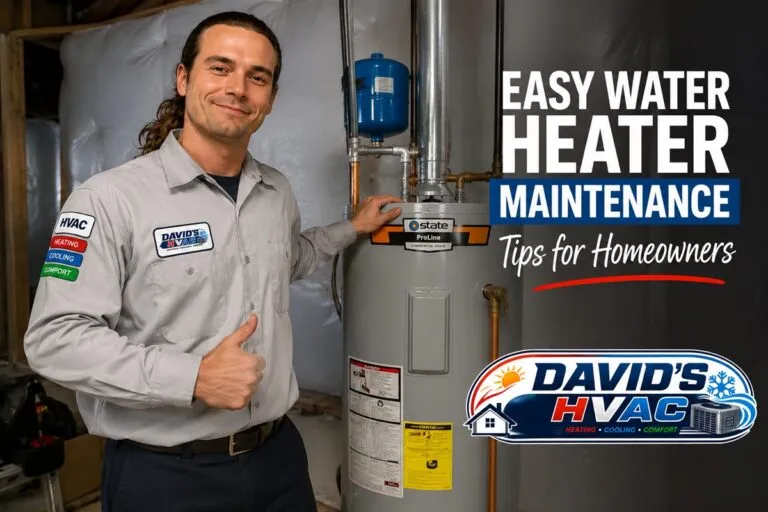
Easy water heater maintenance tips for homeowners can help extend the life of your water heater, improve efficiency, reduce energy waste, and lower the risk of unexpected hot water problems. For homeowners throughout the Denver Metro area, a few simple maintenance habits can make a noticeable difference in how reliably a water heater performs.
Water heaters work every day, often without much attention until something goes wrong. Sediment buildup, excessive temperatures, leaks, corrosion, and worn components can gradually affect performance. Regular water heater maintenance gives homeowners an opportunity to catch these problems early and keep the system operating efficiently.
Check Your Water Heater for Leaks Regularly
One of the easiest water heater maintenance tasks is a quick visual inspection. Look around the tank, pipes, fittings, valves, and the floor surrounding the water heater for signs of moisture.
Even a small amount of water deserves attention. A slow leak can damage flooring, drywall, insulation, and nearby belongings if it continues unnoticed.
Areas to Check for Water Leaks
When inspecting your water heater, pay particular attention to:
- The hot and cold water connections
- The temperature and pressure relief valve
- The drain valve near the bottom of the tank
- Plumbing connections above the water heater
- The base of the water heater tank
- The surrounding floor and drain pan
- Signs of rust, staining, or mineral deposits around fittings
Water collecting underneath the tank can sometimes indicate internal tank corrosion. Because a leaking tank generally cannot be repaired in the same way as a replaceable valve or fitting, professional water heater service should be scheduled promptly.
Flush Sediment From the Water Heater Tank
Sediment naturally collects at the bottom of many tank-style water heaters. Minerals and other particles in the water can settle inside the tank over time, creating a layer around the bottom.
Too much sediment can reduce water heater efficiency and contribute to unusual popping or rumbling sounds. It may also interfere with heat transfer and place additional stress on the water heater.
Why Water Heater Flushing Helps
Periodically flushing a tank-style water heater can help:
- Remove accumulated sediment
- Maintain more efficient heat transfer
- Reduce popping and rumbling noises associated with sediment
- Support consistent hot water performance
- Reduce unnecessary strain on the tank and heating components
Flushing a water heater involves very hot water and requires following the manufacturer’s shutdown and restart procedures. Gas and electric water heaters have different requirements, so homeowners should always consult the manufacturer’s instructions.
If you are uncomfortable working around hot water, gas connections, electrical components, or shutoff valves, schedule professional water heater maintenance instead.
Keep the Water Heater Temperature at a Sensible Setting
The thermostat setting affects comfort, energy consumption, and safety. Setting the water temperature unnecessarily high can increase energy use while also increasing the risk of scalding.
For many households, a setting around 120 degrees Fahrenheit provides a practical balance between hot water availability and energy efficiency. However, the appropriate setting can depend on the household, water heater manufacturer, plumbing system, and individual needs.
Watch for Changes in Water Temperature
A thermostat setting should not require constant adjustment. If your hot water suddenly becomes much hotter or colder without you changing anything, there may be a problem with the thermostat, heating element, burner, or another water heater component.
Inconsistent water temperature can also be a sign that maintenance or professional water heater repair is needed.
Test the Temperature and Pressure Relief Valve
Tank water heaters are equipped with a temperature and pressure relief valve, commonly called a T&P valve. This is an important safety component designed to release pressure under certain unsafe conditions.
Homeowners should not ignore a valve that is leaking, corroded, damaged, or showing other signs of trouble.
Testing procedures can vary, and opening the valve can release extremely hot water. Follow the water heater manufacturer’s maintenance instructions carefully. If you are unsure about the condition of the valve or how to test it safely, have an HVAC or plumbing professional inspect it.
Inspect the Anode Rod When Recommended
The anode rod is one of the most important components for protecting many tank-style water heaters against corrosion. It is designed to corrode over time so the steel tank is better protected.
Because the anode rod is a sacrificial component, it eventually becomes depleted and may need replacement.
Signs an Anode Rod Inspection May Be Due
Consider having the anode rod inspected if:
- The water heater has been operating for several years
- The manufacturer’s maintenance schedule recommends an inspection
- You notice corrosion around the water heater
- Hot water has developed an unusual odor or appearance
- The tank has not received regular maintenance
Replacing a depleted anode rod at the appropriate time may help protect the tank and extend the useful life of the water heater.
Keep the Area Around the Water Heater Clear
The space around a water heater should remain clean and accessible. Avoid piling boxes, cleaning supplies, tools, clothing, or other household items against the unit.
Clearance is particularly important around gas water heaters because proper combustion and ventilation are essential for safe operation.
Keeping the area organized also makes it easier to notice water leaks, corrosion, unusual odors, or other changes that could otherwise remain hidden.
Look for Rust and Corrosion
A small amount of surface discoloration on an older water heater does not always mean the tank is about to fail, but corrosion should never be automatically dismissed.
Check plumbing connections, valves, fittings, and the exterior of the tank for visible rust or deterioration.
Corrosion around a connection may indicate a plumbing issue that can sometimes be repaired. Corrosion involving the tank itself can be more serious and may indicate that water heater replacement should be considered.
Pay Attention to Unusual Water Heater Noises
A water heater should not suddenly become noticeably louder during normal operation. Popping, banging, crackling, or rumbling sounds can sometimes be associated with sediment accumulation or other operating issues.
Do not assume noises are simply a normal part of an aging water heater.
If flushing the tank is recommended by the manufacturer and does not solve the issue, or if the noise is severe, schedule a professional water heater inspection. Identifying the source early may help prevent additional wear or a loss of hot water.
Check the Drain Pan and Drain Line
If your water heater has a drain pan underneath it, inspect the pan periodically. It should be dry under normal conditions.
Water in the drain pan can provide an early warning that the tank, a connection, or another component is leaking.
Also make sure the drain line is not visibly blocked, disconnected, or damaged. A drain pan provides limited protection and is not a solution for an active water heater leak, so any unexplained water should be investigated.
Do Not Ignore Changes in Hot Water Performance
Water heater problems often develop gradually. Homeowners may notice small changes long before the unit stops producing hot water completely.
Contact a professional if you notice:
- Hot water running out much faster than usual
- Water taking longer to heat
- Frequent temperature fluctuations
- Rust-colored or discolored hot water
- Persistent unusual noises
- Water around the tank
- Visible corrosion
- Repeated pilot light or ignition problems on a gas unit
- A noticeable increase in energy use without another explanation
These symptoms can have several causes, and diagnosing the issue early may make repairs simpler.
Schedule Professional Water Heater Maintenance
Homeowners can handle basic visual inspections and certain manufacturer-approved maintenance tasks, but a professional inspection provides a more thorough evaluation of the water heater.
During professional water heater maintenance, a technician can check the condition and operation of key components, look for leaks or corrosion, evaluate performance, and identify signs of wear that may not be obvious during a basic homeowner inspection.
Professional service is especially valuable for older water heaters, systems with recurring problems, and units that have gone several years without maintenance.
Know When Maintenance Is No Longer Enough
Regular maintenance can help a water heater last longer, but it cannot prevent every failure. Eventually, components wear out and tanks can deteriorate.
If an older water heater needs frequent repairs, leaks from the tank, struggles to provide enough hot water, or has significant corrosion, replacement may make more financial sense than continuing to repair it.
A professional can evaluate the condition of the existing system and help determine whether water heater repair or replacement is the better option.
Create a Simple Water Heater Maintenance Routine
Water heater maintenance does not have to be complicated. Building a few basic checks into your normal home maintenance schedule can help you spot problems before they become emergencies.
A practical routine includes visually checking for leaks, watching for corrosion, keeping the surrounding area clear, paying attention to changes in hot water performance, and following the manufacturer’s recommendations for flushing and component inspections.
Keep the owner’s manual available and maintain records of professional service, repairs, and replaced components. Knowing the maintenance history can be useful when troubleshooting problems or deciding whether it is time for a new water heater.
For Denver Metro homeowners, reliable hot water is an important part of year-round comfort. Regular water heater maintenance can help improve efficiency, reduce unnecessary wear, and make unexpected problems easier to catch.
If your water heater is leaking, making unusual noises, producing inconsistent hot water, or simply needs professional maintenance, David’s HVAC can help. Contact David’s HVAC for water heater service in the Denver Metro area and have your system inspected by an experienced professional.
Content reviewed and published according to the David's HVAC Editorial Team.